
A Vision Backed by Resources
In 2019, Alice ISD secured a $1.2 million School Climate Transformation Grant, a pivotal step in reimagining how the district approached attendance and student well-being. The funding enabled the district to expand its social work team, implement trauma-informed practices, and purchase telehealth services to address the increasing mental health needs of students.
The goal was clear: ensure that every campus has a dedicated social worker, creating equitable access to support for all students. By 2022, this vision became a reality.
Social Work at the Center
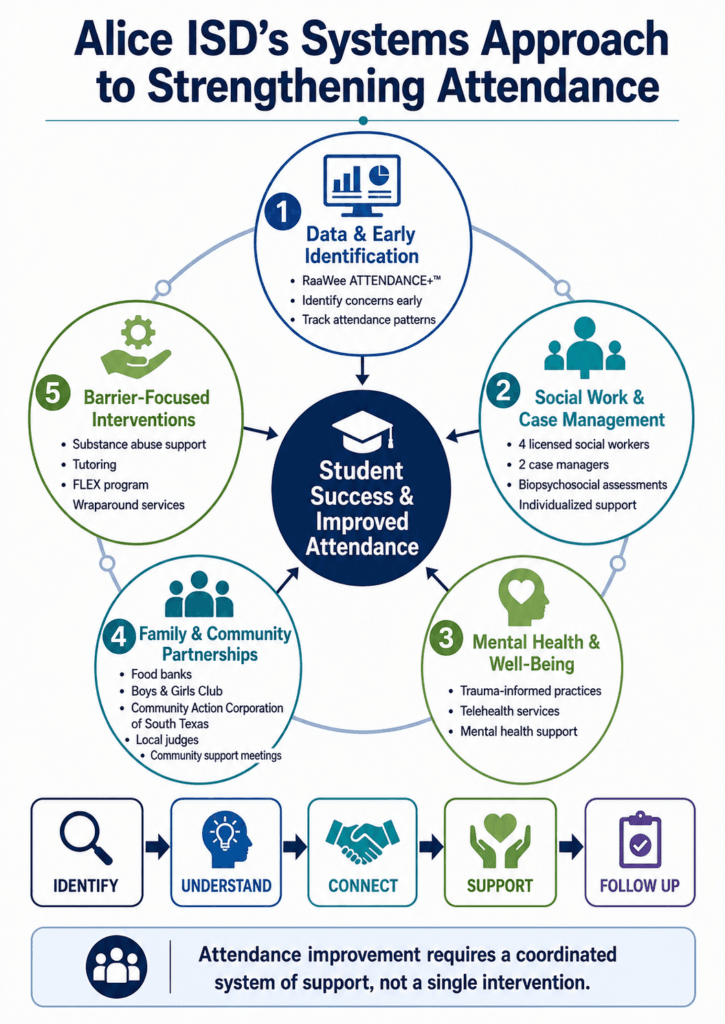
Alice ISD now has four licensed social workers and two case managers leading efforts to tackle chronic absenteeism through proactive and restorative strategies. Their work includes:
- Conducting biopsychosocial assessments to identify barriers to attendance.
- Delivering staff training on trauma-informed practices.
- Offering alternative pathways, such as the FLEX program, to prevent students from dropping out due to economic pressures.
- Leveraging the generalist intervention model to connect students and families with the right resources at the right time.
Attendance, once viewed as an isolated compliance issue, is now recognized as a shared responsibility among educators, families, and the community.
Building Community Partnerships
What sets Alice ISD apart is its ability to rally the community around student success. Partnerships span multiple sectors, including:
- Local judges address truancy cases with a restorative, not punitive, lens.
- Food banks provide weekend meals through backpack programs.
- The Boys and Girls Club of Alice and the Community Action Corporation of South Texas are offering extended support beyond the school day.
- Monthly community support meetings tackle sensitive but urgent topics such as suicide prevention, substance abuse, and healthy relationships.
- These collaborations create a safety net that ensures students not only attend school but also thrive while they’re there.
A Case Study in Action
The district’s systems approach is best illustrated through individual stories. One case involved a 14-year-old student with excessive absences tied to substance use.
Through a comprehensive assessment, the social work team identified the root causes: lack of structure at home, failing grades, and access to synthetic marijuana. Rather than resorting to suspension, the district connected the student with substance abuse treatment, tutoring services, and wraparound supports.
The result? Improved attendance, stabilized grades, and a stronger connection to school.
This case highlights the district’s philosophy: addressing absenteeism requires meeting students where they are and engaging multiple systems, including school, family, and community.
Lessons for Other Districts
Alice ISD’s systems approach demonstrates that addressing chronic absenteeism necessitates more than attendance officers and automated calls home. It takes:
- Data-driven early intervention through tools like Gaggle, which monitors for risks such as self-harm, bullying, and drug use.
- Strategic investments in mental health and climate-building resources.
- Partnerships that extend beyond school walls to address economic and social barriers.
- A whole-child perspective that values belonging, support, and equity as much as compliance.
The key takeaway for other districts: when attendance strategies are grounded in empathy, backed by resources, and supported by the community, students show up, not just physically, but emotionally and academically ready to succeed.