
Addressing Root Causes
Chronic absenteeism doesn’t happen in a vacuum. Students often miss school due to complex psychosocial factors: stress, fear, bullying, or unstable home environments. Recognizing this, Louisiana education leaders drew on trauma-informed practices to design interventions grounded in empathy and understanding.
Students don’t drop out overnight. They disengage slowly, often in silence. By recognizing early signs like school avoidance, educators can intervene with empathy and support before that disengagement becomes irreversible.
Attendance Teams and Tiered Supports
At the heart of Louisiana’s strategy is a statewide attendance workbook designed in collaboration with LSU’s Social Research and Evaluation Center. It offers a step-by-step guide for building effective school-level attendance teams, not just at the district or system level.
These teams use tiered levels of support to respond to students’ needs while avoiding the trap of “tiering” students themselves. With regular data analysis (including ADA, truancy rates, and chronic absence breakdowns by student population), schools can target their efforts where they are needed most. These teams provide a structured way to identify and respond to chronic absenteeism before patterns of absence become more difficult to reverse.
The Empathy Interview Approach
One of the most effective strategies highlighted in the model is the use of empathy interviews. These conversations with students and families uncover personal and systemic barriers to attendance, from transportation issues to anxiety and safety concerns.
This insight leads to smarter interventions, such as:
- Creative scheduling and flexible learning options
- Providing resources in families’ home languages
- Reframing communication to avoid punitive or legalistic language
Even something as simple as recognizing improved attendance rather than just perfect attendance helps build momentum and motivation. For students experiencing chronic absenteeism, these conversations can help attendance teams move beyond the absence itself and understand what is preventing consistent attendance.
Creating a Culture of Belonging
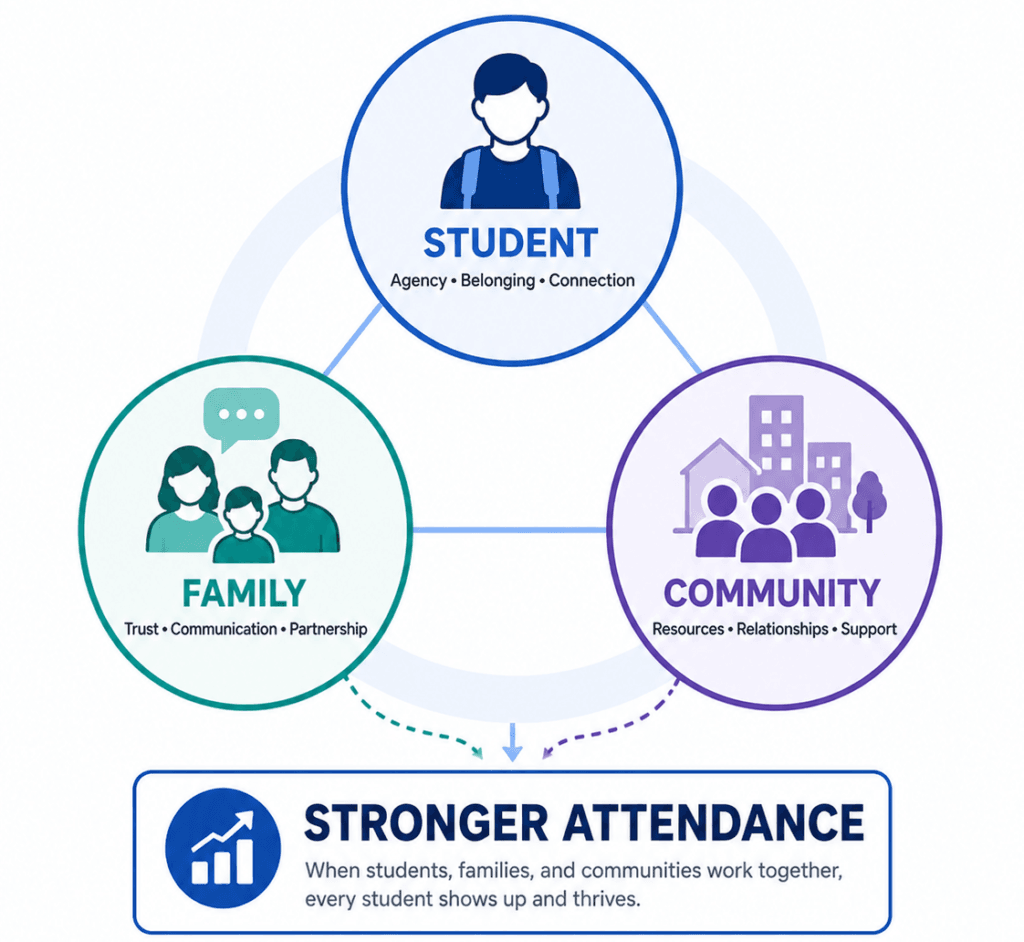
Schools are reimagining what meaningful family engagement looks like as part of a broader strategy to address chronic absenteeism. Instead of one-off events, they are incorporating family voices into school culture year-round: honoring cultural months, celebrating milestones, and calling home not just when things go wrong but to say thank you.
Schools that embed belonging into their culture see higher engagement from both students and families. This includes aligning with local community resources, crafting compelling sponsorships, and ensuring families feel like partners in their child’s education, not spectators.
Turning Insight into Action
The triad approach engaging students, families, and communities does more than reduce absence. It builds stronger school ecosystems where students feel seen, families feel respected, and educators are supported with real tools and data.
To make these strategies sustainable and scalable, districts are turning to tools like RaaWee ATTENDANCE+™. These solutions help operationalize insights, enabling school teams to move from intention to impact with consistency, care, and real-time data.
As more districts look for sustainable ways to address chronic absenteeism, the shift from reactive attendance policies to restorative engagement practices continues to gain momentum.