
Description

Dr. Lesli Guajardo, Denton ISD, shared how her team uses data to improve attendance. Serving 32,000 students across 43 campuses, they leverage the RaaWee Attendance+ system and the Truancy and Dropout Prevention System (TDPs) for tracking. Key strengths include data analysis, training, and relationships. They focus on timely interventions, effective communication, and collaboration with campuses.

Denton ISD’s Data-Driven Strategy

Dr. Lesli Guajardo shared insights on using data-driven strategies to enhance attendance systems. Serving 32,000 students across 43 campuses, the district employs a collaborative approach, integrating data analysis, training, and relationship building to support attendance improvement efforts.

Collaborative Team Approach

Guajardo’s team includes an assistant director, attendance officers, and a data analyst, working together to track attendance trends and identify intervention points. The department utilizes the Truancy and Dropout Prevention System (TDPs) alongside RaaWee Attendance+ to monitor ADA rates, TPMS timeliness, and low-attendance days.

Proactive Engagement Strategies

A key priority is fostering strong relationships with campuses, providing structured training for attendance clerks, and ensuring timely interventions for chronically absent students. Regular data reviews inform targeted strategies, addressing challenges such as early release days and special events that impact attendance.

Continuous Improvement in Attendance Systems

Denton ISD emphasizes ongoing evaluation and collaboration with principals and district leaders. Weekly reports guide decision-making, ensuring attendance initiatives remain effective and sustainable. Through proactive engagement and data-driven decision-making, the district continues to refine its approach to reducing absenteeism.
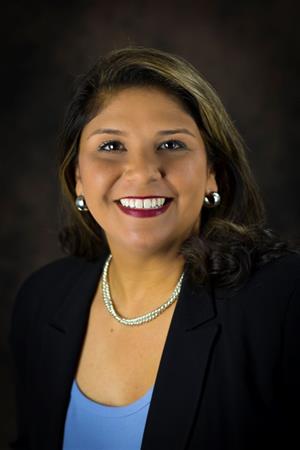
 

About the Presenter

Dr. Lesli Guajardo is the Director of District & Student Support Services for Denton ISD, bringing expertise in education and student advocacy. With a PhD in Educational Leadership, she focuses on fostering a supportive environment for all students.

In her role, Dr. Guajardo oversees programs that enhance student welfare, including counseling and academic support services. She emphasizes collaboration and innovation to ensure students receive necessary resources.

Passionate about equity in education, Dr. Guajardo engages with parents, educators, and the community to address diverse student needs. Her commitment to excellence continues to make a significant impact within Denton ISD.


Description

Pam from Northside ISD discussed their efforts toward attendance improvement by eliminating barriers. With 103,000 students, 11 specialists made 9,000 home visits. Attendance rose to 96.5% post-COVID. They focus on collaboration, community support, and addressing root causes like food insecurity. Their five-year plan emphasizes data-driven, proactive solutions, which align with tools like RaaWee Attendance+ to streamline attendance management and intervention strategies.

Supportive and Collaborative Approaches to Barrier Elimination

Shifting away from punitive measures, Northside ISD focuses on engaging families and leveraging community barrier-specific resources for attendance improvement. Their 11 attendance specialists conducted over 9,000 home visits this year, working closely with McKinney-Vento and PTA programs to support homeless and foster youth.

Whole-Child Approach to Attendance Improvement

The district prioritizes students’ basic needs, addressing food insecurity, housing instability, and special education support before focusing on academics. Parent engagement initiatives, such as pre-K coffee days and educational forums, help families understand attendance laws and available resources to address chronic absenteeism.

Sustaining Attendance Growth with Data-Driven Strategies

Northside ISD leverages data to shape policies, track interventions, and drive campus-wide culture change. Their five-year plan focuses on continuous attendance improvement through collaboration, proactive strategies, and expanded partnerships. As the district refines its approach, innovative tools like RaaWee Attendance+ could offer additional insights to enhance attendance monitoring and intervention efforts.

About the Presenter

Pam Gould, Superintendent at Northside ISD

Pam Gould is the Superintendent of Northside Independent School District (NISD) in Texas, with over 30 years of experience in education. She is recognized for her leadership and dedication to creating a positive learning environment.

Under her leadership, NISD has achieved notable advancements in academic performance and community engagement. Pam promotes innovative teaching practices and technology integration to enhance education.

Pam is committed to promoting equity and inclusivity, ensuring every student has access to necessary resources. She actively engages with community initiatives to strengthen connections between schools and families, making a lasting impact on NISD.

Attendance Team Collaboration

Teamwork is nothing new to the education field–it is a major part of the way we conduct the important business of educating children. Teachers are involved in grade-level or content area teams. Support and clerical staff work together on teams in the front office. Administrators operate on leadership teams at the district level. And there are teams on everything in between: from school climate committees to parent-teacher organizations to curriculum task forces to governing boards. But just because we’re all on teams doesn’t necessarily mean we automatically know how to interact, function, or execute our jobs or missions as one entity. Think about all of the teams you’ve participated on, either voluntarily or by assignment, and the qualities that made them successful…or not. 

Team Building for Success

Building a high-performing attendance team can be a little more complex than groups that are affiliated by subject matter or job roles, since they tend to be multi-disciplinary, cross-functional, and far-reaching. However, they do passionately share the same goal: Improving attendance for our most marginalized students. Here are a few tips for creating and organizing a well-designed attendance team: 

Think outside of the box when deciding whom to invite.

Obviously, you want to include the director of student services, a nurse or child welfare specialist, a site administrator from each grade span, a counselor, and attendance clerks, but also think about adding a student, parent/caregiver, student information system manager, and external community partners that also serve families. They can each add unique and valuable perspectives and offer creative solutions to consider as you craft your strategies and approaches to reduce truancies and chronic absenteeism.

Relationships don’t build themselves.

Though there are many pressing and urgent issues to attend to in your meetings, the work can be done much more effectively when team members know each other as human beings, learn to trust each other, and share their stories together. Spend some time exploring what draws each member to the work, why they care, what motivates them, and what they hope to accomplish by joining the team. These strong relationships will help people commit to coming to meetings and participating with their whole selves for the long term. 

Know and state your purpose.

In early meetings, the team should establish norms, define appropriate goals and expectations, and establish a flexible decision-making process. It’s also important to communicate with each other openly, freely, and democratically. Consider leveling the playing field and breaking down barriers by using first names rather than titles or ranking. When issues are handled professionally and promptly and each member knows how their own part contributes to the whole, teams can cover more ground and make a greater impact on student attendance. 

As the African proverb says “If you want to go fast, go alone, if you want to go far, go together”. And since we have many miles to go before we sleep in the work of improving student attendance, it’s much more sustainable to do so as a team that works!

About the Presenter

Kim Wallace, Professional Educational Consultant & Author at Process Makes Perfect

Born and raised in an educator household, Dr. Kim Wallace started her own career in public education 30 years ago as a high school English and history teacher before becoming a site principal and district office administrator. Her most recent K-12 role was as superintendent of one of the 20 largest school districts in California. 

Kim joined the UC Berkeley School of Education Leadership Programs division as the Associate Director of the 21st Century California School Leadership Academy (21CSLA) State Center in 2020. She also runs her own consulting company Process Makes Perfect, specializing in real world solutions for practitioners in the field. Kim consults, writes, and presents internationally on systems change and emerging trends in educational leadership. An award-winning, innovative educator, Kim leverages her abilities in educational administration, program management, and relationship development to optimize institutional effectiveness and deliver remarkable results.

Dr. Wallace’s book Leading the Launch: A Ten-Stage Process for Successful School District Initiatives was published by Solution Tree Press in 2021, followed by Leading Through an Equity Lens in 2023. Her upcoming book, Gamechanging Leadership in Action: An Educator’s Companion is in production with Routledge/Taylor & Francis (Fall 2025). Kim attended the University of California Santa Barbara for her undergraduate degree in history. She then earned her Master’s in Education (M.Ed.) at the University of California Los Angeles and culminated her educational goals with a Doctorate in Education (Ed.D.) from the University of California Davis.