
A well-designed attendance strategy can only create impact if people understand it.
District leaders may invest significant time developing attendance goals, identifying priorities, and selecting interventions. Yet even the strongest plan can lose momentum if families, staff, students, and community partners are unclear about their role in making attendance a shared priority.
This article, inspired by the fourth session of the Strategic Attendance Planning Playbook series, explores why attendance communication should be treated as a leadership strategy that builds understanding, trust, and shared ownership across the school community.
Attendance Communication Should Create Clarity
Attendance messaging is often associated with reminders about absences or policy requirements. While those messages are important, they represent only one part of an effective communication strategy.
Strong attendance communication helps people understand why attendance matters, how it supports student success, and what actions they can take to encourage consistent school attendance.
When communication is intentional, it transforms attendance from an expectation into a shared commitment.
Every Audience Needs a Different Message
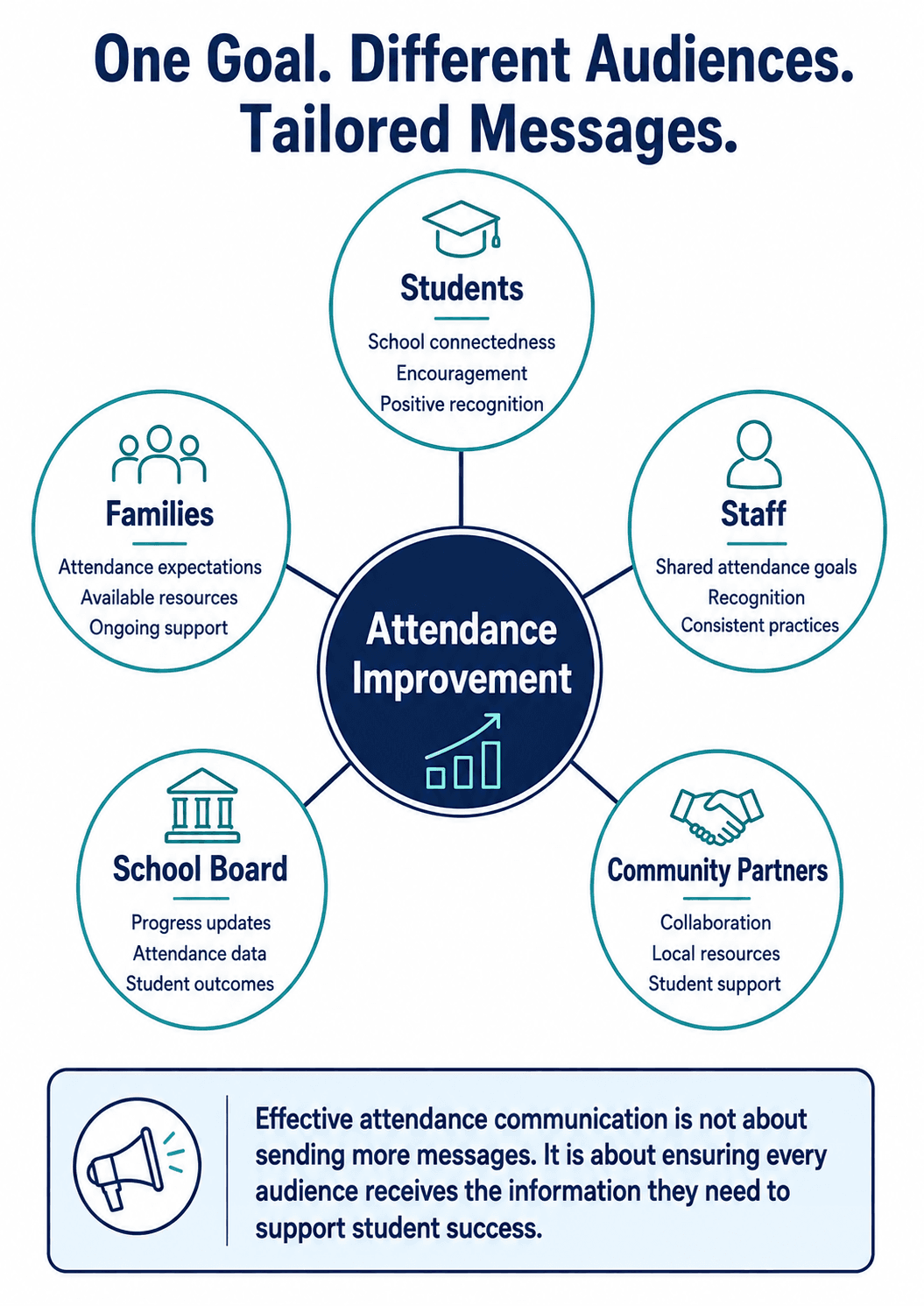
Families, students, educators, school boards, and community partners all contribute to attendance improvement, but they do not need the same information.
Parents may need practical guidance about attendance expectations, available resources, or how to access their child’s attendance information. Staff benefits from consistent messaging that reinforces attendance goals and celebrates progress. School boards require clear updates that demonstrate impact and support informed decision-making. Community organizations need to understand how their partnerships contribute to student success.
Tailoring communication to each audience helps ensure that every message is relevant, meaningful, and actionable.
Recognition Reinforces Positive Attendance Habits
Recognition is another important part of effective attendance communication.
Celebrating attendance improvement sends a positive message about what schools value while encouraging continued engagement from students, families, and staff.
Recognition does not have to focus exclusively on perfect attendance. Acknowledging improvement, persistence, and consistent effort allows more students to experience success while encouraging continued growth.
RaaWee ATTENDANCE+™ supports these efforts by making recognition a consistent part of a district’s attendance strategy. Districts can use automated, personalized communications to celebrate attendance improvements, recognize positive attendance behaviors, and keep students and families engaged throughout the school year. This helps attendance teams reinforce positive habits while reducing the time and effort required to manage recognition manually.
Attendance Communication Builds Trust Through Consistency
Communication is most effective when it is planned rather than reactive.
Developing an annual communication plan allows districts to share attendance expectations, resources, celebrations, and important reminders throughout the school year instead of only reaching out when attendance concerns arise.
Consistent communication also creates opportunities to answer questions, address misconceptions, and keep attendance visible as an ongoing district priority. Visual dashboards, campaign materials, and progress updates can help maintain momentum while demonstrating how collective efforts are making a difference.
When families know what to expect and where to find information, trust grows over time.
Collaboration Strengthens Every Message
Attendance communication is most powerful when it extends beyond the attendance office.
School leaders, teachers, counselors, family engagement specialists, community organizations, and other trusted voices all have opportunities to reinforce consistent attendance messages throughout the year.
When these voices communicate with shared purpose, families receive clear and consistent information instead of fragmented messages from different departments.
A coordinated approach helps attendance become part of the district’s culture rather than a campaign that appears only during Attendance Awareness Month or after attendance concerns emerge.
A Roadmap People Can Follow
Communication should do more than share information. It should help people understand where the district is headed, why attendance matters, and how every individual contributes to student success.
When communication is clear, consistent, and audience-focused, it builds confidence, strengthens partnerships, and creates the shared understanding needed to sustain attendance improvement over time.
The most effective attendance strategies are not simply implemented. They are communicated in ways that inspire people to take part.
Looking Ahead
The next article in the series explores how districts can strengthen attendance efforts by building internal capacity and developing partnerships that expand support for students and families.
Additional Resources

About the Presenter
Sharon Bradley is a national educational consultant, author, and speaker with over 25 years of experience in K–12 education. She previously served as a district administrator in the Dallas–Fort Worth area, leading districtwide efforts in truancy prevention and student engagement, and has held roles including student services director, high school principal, assistant principal, and dropout prevention coordinator.
She is the author of Chronic Absenteeism: Prevention and Intervention Strategies for Schools, Families, and Communities and Combating Chronic Absenteeism through Attendance Intervention Plans. Sharon is also a founding member of Attendance USA and was recognized as a 2024 “Leader to Learn From” by EducationWeek and the 2023 “Person of the Year” by the International Truancy and Dropout Prevention Association.
She currently serves as Partner Success Manager at RaaWee K12 Solutions, supporting districts with proven attendance and engagement strategies.