

A New Perspective on Why Students Show Up
Student Attendance conversations often begin with a simple question:
“How many days has a student missed?”
But the more important question may be:
“What influences a student’s decision to be present?”
Chronic absenteeism is not only a measure of missed instructional time. It can signal barriers related to belonging, relationships, support systems, or a student’s connection to school. Two students may have the same number of absences but experience very different circumstances. Understanding what is behind those absences can help schools move beyond standardized responses and toward interventions that address the conditions influencing attendance.
When students feel connected, valued, and supported, attendance becomes more than a requirement, it becomes part of a positive school experience.
That perspective raises deeper questions for education leaders:


What a Proactive Attendance Approach Looks Like
Improving attendance starts with seeing the student behind the absence.
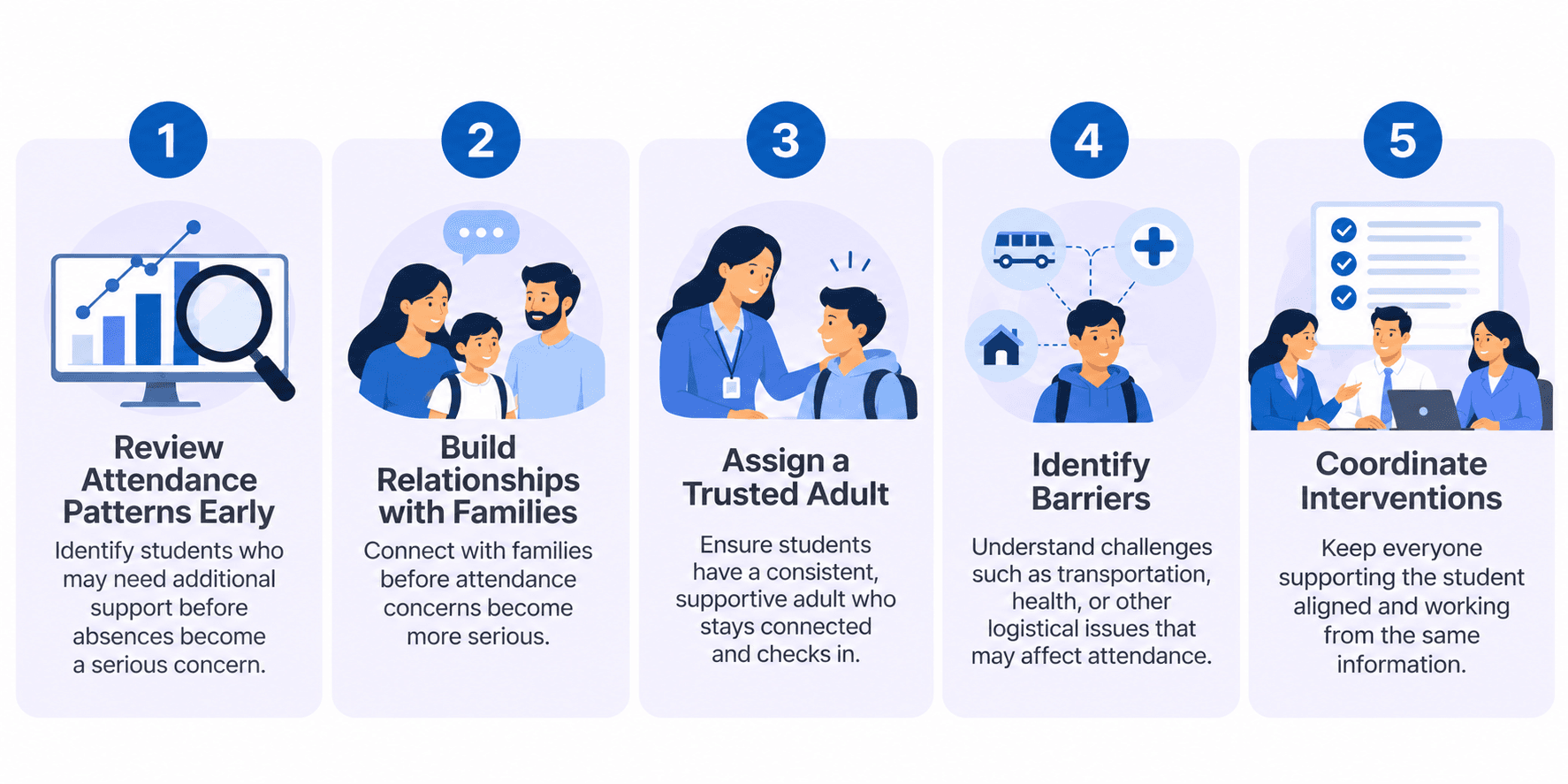
A proactive approach helps school teams understand student attendance challenges earlier, connect with families, and provide support before a pattern becomes difficult to change.
Instead of waiting for a student to reach an intervention threshold, teams can:
When the Same Number of Absences Means Different Things
Two students can miss the same number of school days for completely different reasons, and those reasons can require very different responses.
Schools Spared, Children Punished challenges schools to look beyond the absence itself and examine the conditions influencing a student’s ability or willingness to attend.
A student facing caregiving or transportation challenges may need practical support. A student struggling with the school environment may need changes within that environment. A student experiencing anxiety may need therapeutic support.
This is the shift at the heart of Attendance Science™: Move from simply counting absences to understanding the evidence and context behind them, so interventions can be matched to the reason for the absence.
Connecting Attendance Information to the Right Response
Identifying an attendance concern is only the beginning. The real impact comes from what happens next.
When attendance information, intervention history, family communication, and follow-up are connected, teams can move from identifying a concern to coordinating a response.
A connected approach helps teams:
➛ See the full picture of a student’s attendance.
➛ Understand what support has already been provided.
➛ Keep staff aligned around next steps.
➛ Maintain consistent follow-up with students and families.
➛ Use attendance insights to inform ongoing support.
The result is a more connected process, one that helps teams respond with context, consistency, and purpose.
Turning a Proactive Attendance Strategy Into Daily Practice
This is where a connected attendance platform can help.
RaaWee ATTENDANCE+™ brings student attendance awareness, communication, intervention management, documentation, and analytics together in one platform.
Instead of relying on disconnected spreadsheets, messages, and manual follow-ups, teams can work from a shared view of attendance and intervention activity, helping them identify needs earlier and coordinate next steps more consistently.
The goal isn’t simply to track who is absent.
It’s to help teams understand what is happening, respond earlier, and keep students and families connected to the support they need.
Ready to Put a More Proactive Attendance Strategy Into Practice?
See how RaaWee ATTENDANCE+™can help your district connect attendance data, interventions, communication, and follow-up in one place.