
Every district wants to improve student attendance. The challenge is deciding where to begin.
Attendance teams often have a long list of ideas, from strengthening family communication to expanding student support and refining intervention processes. While each strategy has value, implementing every initiative at once is rarely practical or sustainable.
This article, inspired by the third session of our Strategic Attendance Planning Playbook series, explores how districts can prioritize attendance strategies that address the barriers students face while building systems that support long-term success.
Every Attendance Barrier Requires a Different Student Support Route
Improving attendance begins with understanding why students are absent.
Chronic absenteeism is not a single challenge with a single solution. Students miss school for many different reasons, including health concerns, transportation issues, family responsibilities, bullying, disengagement, and other barriers that affect their ability to attend consistently.
Because these challenges are different, the response must be different as well.
Rather than relying on one universal attendance initiative, districts are more successful when they use data to identify patterns, understand root causes, and select student support strategies that reflect the needs of their students and communities.
The goal is not to implement more strategies. It is to implement the right ones.
Attendance Supports Every District Priority
Attendance should not compete with other district initiatives. It should strengthen them.
Student attendance influences academic performance, literacy, graduation outcomes, accountability measures, and funding. When students are consistently present, every instructional initiative has a stronger opportunity to succeed.
Positioning attendance as a shared responsibility across academics, student services, communications, school leadership, and other departments helps create stronger collaboration and more sustainable results. Instead of operating as a separate initiative, attendance becomes part of the district’s broader strategy for student success.
Build Systems That Outlast Individuals
Many successful attendance efforts begin because of passionate educators who are committed to supporting students.
Sustainable improvement, however, depends on systems rather than individuals.
Clear attendance policies, consistent intervention processes, reliable data, and shared ownership help ensure that effective practices continue even as staff roles and leadership change.
Strong systems also create consistency across campuses, making it easier for students and families to receive timely, equitable support regardless of where they attend school.
Shift From Reacting to Preventing
Too often, attendance interventions begin only after a student has accumulated a significant number of absences.
A more effective approach focuses on identifying barriers early and responding before attendance patterns become chronic.
Early communication with families, restorative practices, wellness supports, flexible learning options when appropriate, and individualized attendance improvement plans can all help address barriers before they become long-term challenges.
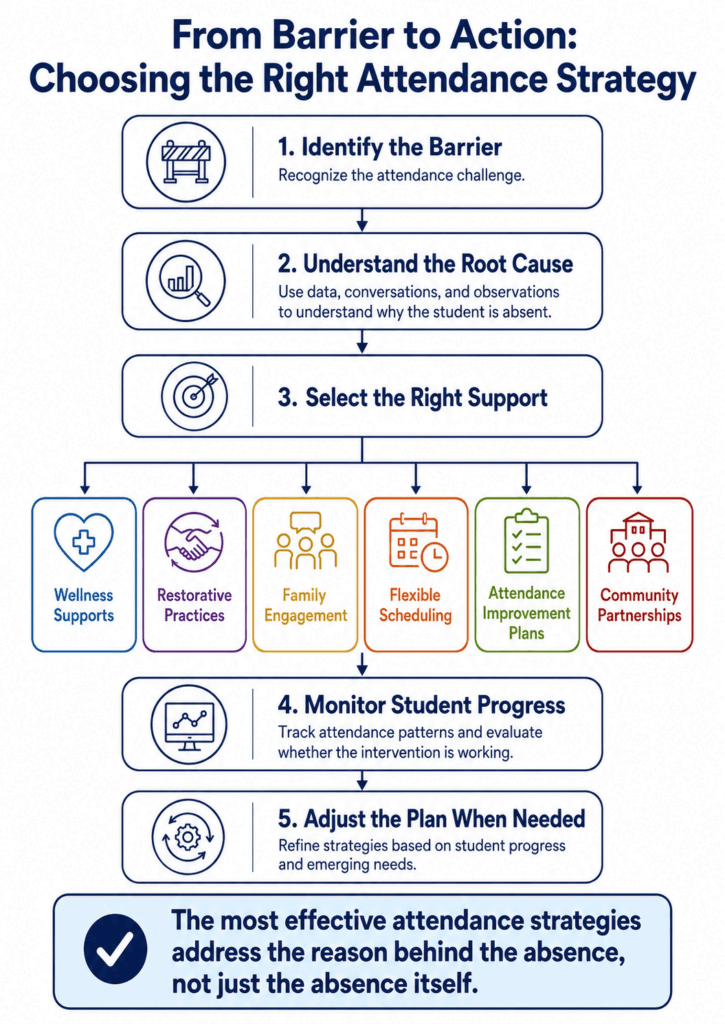
Proactive support not only improves attendance outcomes, but also strengthens relationships between schools, students, and families.
Match Student Support to the Need
No single attendance strategy or student support approach works for every student.
A student experiencing chronic illness may need coordinated healthcare supports. Another student may benefit from restorative conversations that rebuild school connectedness. Others may require transportation assistance, academic support, flexible scheduling, or targeted family engagement.
Effective attendance planning recognizes these differences and responds with interventions that address the specific barrier rather than applying the same solution to every situation.
When districts understand the reason behind absenteeism, they are better equipped to provide meaningful student support that helps students return to school and stay engaged.
Purposeful Planning Creates Lasting Results
Improving attendance is not about doing more. It is about making thoughtful decisions that produce meaningful outcomes.
Districts that prioritize strategies based on data, align attendance with broader district goals, and build systems that support consistent student support and intervention create a stronger foundation for long-term success.
Every attendance initiative should answer one simple question:
Will this help remove barriers and make it easier for students to show up, stay engaged, and succeed?
When the answer is yes, districts are choosing the right route toward sustainable attendance improvement.
Looking Ahead
The next article in this series explores how districts can communicate their attendance vision through clear, consistent messaging that builds trust, encourages engagement, and strengthens partnerships with families, staff, and the broader school community.
Additional Resources

About the Presenter
Sharon Bradley is a national educational consultant, author, and speaker with over 25 years of experience in K–12 education. She previously served as a district administrator in the Dallas–Fort Worth area, leading districtwide efforts in truancy prevention and student engagement, and has held roles including student services director, high school principal, assistant principal, and dropout prevention coordinator.
She is the author of Chronic Absenteeism: Prevention and Intervention Strategies for Schools, Families, and Communities and Combating Chronic Absenteeism through Attendance Intervention Plans. Sharon is also a founding member of Attendance USA and was recognized as a 2024 “Leader to Learn From” by EducationWeek and the 2023 “Person of the Year” by the International Truancy and Dropout Prevention Association.
She currently serves as Partner Success Manager at RaaWee K12 Solutions, supporting districts with proven attendance and engagement strategies.