Galena Park ISD demonstrates how aligning an entire district around attendance can turn everyday actions into sustained improvement. Their approach shows that when expectations are shared, processes are consistent, and interventions are tracked with discipline, campuses create the conditions for stronger student outcomes.

A Shared Framework That Keeps Attendance Front and Center

The district places attendance at the core of its work by setting clear expectations and consistently reinforcing them. Weekly ADA reports, a simple color-coded performance system, and ongoing conversations with campus leaders keep everyone focused on progress.

Color-coding green for strong attendance, yellow for acceptable, and red for below the district goal provides leaders, clerks, and support staff a common language. It ensures that every campus knows where it stands and what needs attention.

Even when natural events like hurricanes and ice storms disrupt routines, the district maintains its focus by embedding attendance in all meetings and communication channels. This consistency signals that attendance is not a seasonal initiative but a sustained priority.

Training That Builds Alignment Across Roles

Galena Park ISD invests heavily in ensuring everyone understands their role in the attendance process. Districtwide training at the start of each school year creates foundational alignment among principals, assistant principals, counselors, social service workers, and attendance and truancy clerks.

Throughout the year, the district reinforces expectations through recurring structures:

    • Monthly meetings with assistant principals to review campus work in RaaWee Attendance+
    • Monthly meetings with attendance and truancy clerks to surface concerns, share updates, and celebrate progress
    • Open lab sessions for staff who need hands-on help using the RaaWee system

These touchpoints make attendance a daily habit rather than an occasional check-in. They also strengthen collaboration among the people who perform the work closest to students and families.

A System That Supports Timely, Documented Interventions

The district relies on RaaWee Attendance+ to organize and track interventions. Staff log outreach, follow-up tasks, and next steps so that no student case depends on memory or isolated spreadsheets. The action board becomes a living workspace for clerks, administrators, and support staff. This structure supports:

    • Early identification of concerning patterns
    • Consistent follow-through
    • Clear visibility into who is doing what
    • Stronger communication with families
    • Better coordination among campus teams

ASAP officers also play a role by conducting home visits and verifying addresses. Their work supports safety, re-engagement, and early problem-solving when attendance concerns arise.

Recognition That Reinforces Consistent Practice

Galena Park ISD understands that attendance improvement requires sustained effort, and they reinforce that effort through recognition. Using RaaWee reports, the district highlights top users and campuses that consistently complete interventions and maintain accurate records.

Principals receive attendance-based incentive checks, which they can use to motivate students and strengthen campus culture. Student incentives such as dances, celebrations, and other rewards are supported through grants, district budget allocations, and partnerships with local businesses.

This recognition system keeps everyone focused on the behaviors that matter. 

Communication and Relationship-Building as the Foundation

Across the session, the district emphasized that the heart of attendance work is relationship-building with students, families, and one another. Regular communication, predictable processes, and a unified message help build trust. This consistency also supports accountability, including the enforcement of policy in cases of extensive unexcused absences.

By keeping attendance visible in every meeting and making communication a daily practice, the district ensures that teams stay aligned and families stay informed.

What Other Districts Can Take Away

Galena Park ISD’s approach highlights several strategies that strengthen whole-team buy-in for timely interventions:

    • Make attendance expectations clear and visible across the district
    • Use simple systems that help leaders and staff understand performance at a glance
    • Provide training that reaches every role involved in attendance
    • Reinforce expectations through regular meetings and hands-on support.
    • Use a centralized platform to track interventions and tasks
    • Recognize staff and campuses that maintain strong attendance practices
    • Lean on partnerships and available resources to support incentives
    • Keep communication steady, transparent, and relationship-driven

When every adult in a district understands their role, knows what to do, and has the tools to act quickly, timely interventions become routine, and districts build the conditions for lasting success.

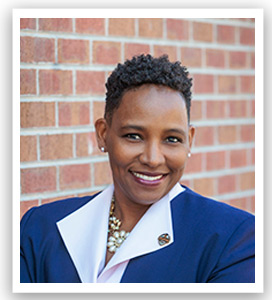
Myra Castaneda
Myra Castaneda

About the Author

Myra Castaneda is the Program Director for Educational Support at Galena Park Independent School District (ISD) in Texas. She is dedicated to enhancing educational opportunities for all students and promoting academic success within the district.

In her role, Myra oversees programs that provide essential resources and support to students, educators, and families. She collaborates with teachers, administrators, and community partners to develop innovative strategies that address student needs, fostering a positive learning environment and promoting engagement.

With a strong background in education, Myra is committed to empowering learners and ensuring they have the necessary tools to thrive academically and personally, making a significant impact at Galena Park ISD.


In Alice ISD, attendance is more than a metric; it’s a reflection of how well the district removes barriers to student success. Serving nearly 5,000 students in South Texas, with 92.8% identifying as Hispanic and more than 84% economically disadvantaged, Alice ISD faces challenges that extend far beyond the classroom. Economic pressures, adolescent substance use, and the lingering effects of the pandemic have all fueled chronic absenteeism.

Rather than relying on punitive measures, Alice ISD built a systems approach that blends social work, mental health services, and community partnerships with real-time insights from the RaaWee Attendance+. This combination enables the district to identify issues early, mobilize resources promptly, and ensure that students are not only present but also fully supported in their learning journey.

A Vision Backed by Resources

In 2019, Alice ISD secured a $1.2 million School Climate Transformation Grant, a pivotal step in reimagining how the district approached attendance and student well-being. The funding enabled the district to expand its social work team, implement trauma-informed practices, and purchase telehealth services to address the increasing mental health needs of students.

The goal was clear: ensure that every campus has a dedicated social worker, creating equitable access to support for all students. By 2022, this vision became a reality.

Social Work at the Center

Alice ISD now has four licensed social workers and two case managers leading efforts to tackle chronic absenteeism through proactive and restorative strategies. Their work includes:

    • Conducting biopsychosocial assessments to identify barriers to attendance.
    • Delivering staff training on trauma-informed practices.
    • Offering alternative pathways, such as the FLEX program, to prevent students from dropping out due to economic pressures.
    • Leveraging the generalist intervention model to connect students and families with the right resources at the right time.

Attendance, once viewed as an isolated compliance issue, is now recognized as a shared responsibility among educators, families, and the community.

Building Community Partnerships

What sets Alice ISD apart is its ability to rally the community around student success. Partnerships span multiple sectors, including:

    • Local judges address truancy cases with a restorative, not punitive, lens.
    • Food banks provide weekend meals through backpack programs.
    • The Boys and Girls Club of Alice and the Community Action Corporation of South Texas are offering extended support beyond the school day.
    • Monthly community support meetings tackle sensitive but urgent topics such as suicide prevention, substance abuse, and healthy relationships.
    • These collaborations create a safety net that ensures students not only attend school but also thrive while they’re there.

A Case Study in Action

The district’s systems approach is best illustrated through individual stories. One case involved a 14-year-old student with excessive absences tied to substance use.

Through a comprehensive assessment, the social work team identified the root causes: lack of structure at home, failing grades, and access to synthetic marijuana. Rather than resorting to suspension, the district connected the student with substance abuse treatment, tutoring services, and wraparound supports.

The result? Improved attendance, stabilized grades, and a stronger connection to school.

This case highlights the district’s philosophy: addressing absenteeism requires meeting students where they are and engaging multiple systems, including school, family, and community.

Lessons for Other Districts

Alice ISD’s systems approach demonstrates that addressing chronic absenteeism necessitates more than attendance officers and automated calls home. It takes:

    • Data-driven early intervention through tools like Gaggle, which monitors for risks such as self-harm, bullying, and drug use.
    • Strategic investments in mental health and climate-building resources.
    • Partnerships that extend beyond school walls to address economic and social barriers.
    • A whole-child perspective that values belonging, support, and equity as much as compliance.

The key takeaway for other districts: when attendance strategies are grounded in empathy, backed by resources, and supported by the community, students show up, not just physically, but emotionally and academically ready to succeed.

Addressing chronic absenteeism requires more than monitoring data, it demands real connection with the students behind the numbers. In Louisiana, a new collaborative model is transforming how schools respond to absence, centering engagement at every level: student, family, and community.

By focusing on agency, belonging, and connection, Louisiana’s approach shifts the focus from punitive interventions to proactive, personalized support. The results speak for themselves: in one pilot district, chronic absence decreased by 40%, and average daily attendance (ADA) climbed from 70% to over 90%.

Addressing Root Causes

Chronic absence doesn’t happen in a vacuum. Students often miss school due to complex psychosocial factors; stress, fear, bullying, or unstable home environments. Recognizing this, Louisiana education leaders drew on trauma-informed practices to design interventions grounded in empathy and understanding.

Students don’t drop out overnight. They disengage slowly, often in silence. By recognizing early signs like school avoidance, educators can intervene with empathy and support before that disengagement becomes irreversible.

Attendance Teams and Tiered Supports

At the heart of Louisiana’s strategy is a statewide attendance workbook designed in collaboration with LSU’s Social Research and Evaluation Center. It offers a step-by-step guide for building effective school-level attendance teams, not just at the district or system level.

These teams use tiered levels of support to respond to students’ needs while avoiding the trap of “tiering” students themselves. With regular data analysis (including ADA, truancy rates, and chronic absence breakdowns by student population), schools can target their efforts where they are needed most.

The Empathy Interview Approach

One of the most effective strategies highlighted in the model is the use of empathy interviews. These conversations with students and families uncover personal and systemic barriers to attendance; from transportation issues to anxiety and safety concerns.

This insight leads to smarter interventions, such as:

  1. Creative scheduling and flexible learning options
  2. Providing resources in families’ home languages
  3. Reframing communication to avoid punitive or legalistic language

Even something as simple as recognizing improved attendance rather than just perfect attendance helps build momentum and motivation.

Creating a Culture of Belonging

Schools are reimagining what meaningful family engagement looks like. Instead of one-off events, they are incorporating family voices into school culture year-round: honoring cultural months, celebrating milestones, and calling home not just when things go wrong but to say thank you.

Schools that embed belonging into their culture see higher engagement from both students and families. This includes aligning with local community resources, crafting compelling sponsorships, and ensuring families feel like partners in their child’s education not spectators.

Turning Insight into Action

The triad approach engaging students, families, and communities does more than reduce absence. It builds stronger school ecosystems where students feel seen, families feel respected, and educators are supported with real tools and data.

To make these strategies sustainable and scalable, districts are turning to tools like RaaWee Attendance+. These solutions help operationalize insights, enabling school teams to move from intention to impact with consistency, care, and real-time data.

As more districts adopt this model, the shift from reactive attendance policies to restorative engagement practices continues to gain momentum. And with the right tools and mindset, every school can create a culture where every day and every student truly matters.

About the Presenter

Shelneka Adams-Marsalone serves as the Child Welfare & Attendance Liaison at the Louisiana Department of Education.

In this role, she guides statewide initiatives to reduce chronic absenteeism by shifting from punitive approaches to restorative, student-centered practices. She works closely with districts to equip child welfare and attendance professionals with tools that strengthen family engagement and build positive school climates.

A strong advocate for the RESET model (Restoring Every Student, Every Teacher), she champions strategies that keep students connected to learning and address root causes of absence. Her work reflects a deep belief that attendance is not just about compliance, but about ensuring every child feels supported, valued, and capable of success.

Summary

Mr. Carampatan from Aldine ISD presented strategies to boost student attendance and combat absenteeism, emphasizing the importance of RaaWee Attendance+ tools. The district saw a 1.08% increase in ADA, with 52% of campuses achieving at least a 1% growth. RaaWee’s warning letters and attendance contracts significantly improved attendance. The district’s plan involved data-driven decisions, weekly monitoring, Triad’s parental support, and monthly rewards to boost attendance.

Data-Driven Absenteeism Reduction

Aldine ISD implemented RaaWee Attendance+ to enhance student attendance across 83 campuses. After a year of use, the district saw a 1.08% increase in Average Daily Attendance (ADA), with 52% of campuses achieving at least a 1% improvement. Automated warning letters and attendance contracts played a crucial role in this success.

Stakeholder Collaboration and Strategic Planning

Aldine emphasized a structured approach by defining roles, engaging stakeholders, and leveraging data from E-School for decision-making. Weekly monitoring, structured support, and positive reinforcement, such as financial incentives and monthly competitions, sustained progress.

Targeted Attendance Support for Schools

To address varying attendance challenges, campuses were categorized using SAC criteria. Schools with higher absenteeism received tailored action plans and additional support to drive improvement.

Utilizing RaaWee Attendance+ for Effective Interventions

RaaWee  Attendance+ streamlined attendance tracking, automated alerts, and ensured timely interventions. The district also partnered with Triad, a Harris County service, to provide parental training and prevent truancy.

Sustaining a Culture of Accountability

Aldine ISD ensured a smooth implementation through clear communication and phased rollouts. By celebrating successes and refining strategies, the district continues to foster a culture of accountability and engagement, applying consistent attendance policies across all grade levels.

About the Presenter

Paul Carampatan, Director of School Administration at Aldine ISD.

Paul Carampatan is dedicated to student success as the Director of Student Services at Aldine ISD in Texas. He oversees programs that support diverse student needs and focuses on equity and access.

With over a decade of experience in educational administration, Paul collaborates with teachers, parents, and community partners to foster a supportive environment. He advocates for mental health awareness and social-emotional learning.

In his free time, Paul enjoys family activities and exploring Texas’s cultural diversity, making a positive impact on Aldine ISD students.

Powerful Attendance Improvement

Allison Woods, Assistant Superintendent of Warren Township, shared the district’s attendance efforts. With 11,500 students, including 16% with disabilities and 17% multilingual learners, proactive tracking and engagement reduced chronic absenteeism by 15%. Partnering with RaaWee Attendance+ improved attendance by 8%+ in a year, supported by tiered interventions and family outreach.

The Importance of Student Attendance for Academic Success

Schools increasingly recognize student attendance as vital for academic success. This case study explores MSD Warren’s initiative to improve attendance rates by addressing barriers and fostering accountability. Through strategic communication and targeted interventions, MSD Warren Township has achieved significant improvements.

Background: Challenges in Attendance Rates

Initially, MSD Warren faced attendance rates around 85.11% during the 2021-2022 school year. As a result, different strategies produced uneven results. To address this, the district launched a plan to improve communication, accountability, and student engagement.

Key Strategies for Improving Student Attendance

  • Cultural Shift in Attendance Perception: The initiative started with changing how attendance was viewed. It stressed the importance of being present for both success and well-being through discussions with families and students.
  • Systematic Attendance Plan: Additionally, a clear plan outlined communication methods, competitions, and recognition for good attendance, promoting responsibility.
  • Proactive Communication: Family engagement liaisons also called families of chronically absent students to build support early on.
  • Tiered Intervention Model: The district implemented a model that addressed attendance issues at three levels, ensuring responses matched the severity of the problem.

Results: Significant Improvements in Attendance Rates

By the end of the 2022-2023 school year, attendance rates improved to about 94%. This change reflects effective strategies and a united effort from the school community.

Conclusion: Lessons Learned for Enhancing Student Attendance

In conclusion, MSD Warren’s approach serves as a helpful example for other schools. By addressing barriers and encouraging accountability, the district raised attendance rates and improved student outcomes. This shows the value of teamwork and proactive actions in making meaningful changes.

About the Presenter

Allison Woods, Asst Superintendent for Exceptional Learners and Whole Child at MSD Warren Township

Allison Woods is an accomplished educator and administrator at MSD Warren Township, dedicated to fostering a positive learning environment and enhancing student achievement. With a strong educational background, she implements innovative teaching strategies and supports teachers in their development. Her commitment to student success is evident through her collaboration with families, staff, and community partners, creating a supportive atmosphere that empowers students.

Allison has been involved in initiatives aimed at improving educational outcomes and promoting equity within the district. Her leadership and dedication have made a significant impact on the MSD Warren Township community, inspiring both students and educators.

Description

We are dedicated to helping educators get their students back to school. The purpose of this information is to point out some roadblocks that impede progress; to help schools reduce chronic absenteeism and get their school-avoidant kids back to learning. We will propose solutions that you can employ to remove these barriers and improve successful school returns.

Problem: School Avoidance Disrupts Families and Challenges Schools.


School avoidance wreaks havoc on families.
The following are some examples of how families in our school avoidance alliance community describe it:

  • Pernicious, Isolating, Overwhelming, Draining, Gut wrenching, Hopeless, Stressful, and Torturous.

School avoidance also profoundly impacts educators who want to help these kids. These are some ways educators describe it:

  • Frustrating, Confounding, Helpless, Discouraging, Time-Consuming, Lack of Interventions, Feeling like a failure, and Tiring.

There has been an underwhelming amount of guidance on this issue, so schools and educators must seek solutions independently.

The good news is that you and your colleagues have the power to improve student outcomes. 

  • Schools have to commit to addressing this problem. 
  • Misinformation and misconceptions will hamper your efforts to engage effectively with students and their families.
  • School staff must be thoroughly educated to start tackling this problem. Once the team is educated, they will feel empowered to utilize appropriate interventions, strategies, and engagement.

Problem: Truancy and School Avoidance are Different.

School avoidance is motivated by severe emotional distress; the parents know the child is not attending and usually are trying to help their kids back. On the other hand, truancy is usually motivated by pleasure and not anxiety-based, it is concealed from the parents, and kids seek to increase positive emotions.

  • Labeling school-avoidant kids as truants causes inappropriate and often damaging responses.
  • Kids with school avoidance are not deliberately ditching school. Internal feelings of distress, discomfort and fear cause their avoidant behavior. 
  • An excellent first step would be to adjust how you define truancy and label kids with school avoidance as truant.  

Another huge issue that should be evaluated is punitive responses. And responses that feel punitive to families and their students. Family feedback on this issue reveals the following school responses make families think the school is unfeeling, unkind, and punishing.

  • Curt and cold attendance letters with threats of fines, truancy charges, and court appearances.
  • Sending police officers to the home
  • Failing students without considering their school avoidance is caused by mental health challenges or learning differences.
  • Utilizing grade retention.
  • Calling in child protective services with no evidence of parental neglect.

The school attendance, mental health, and SEL community have promoted restorative practices over punitive ones for several years. Unfortunately, this guidance needs to trickle down to individual schools faster. These responses often create acrimony between school and home, countering best practices for getting kids back to school.

Problem: Early Interventions Take Work to Achieve.

Early interventions are among the most critical drivers for reducing school avoidance and getting students back quicker. Performing early action is dependent on the following factors:

  • Educating families on school avoidance, since most parents are unaware of it, they often miss early signs and are unsure how to help the situation.
  • Families don’t realize their school has a team of mental health professionals available to help them.
  • Provide your staff with school avoidance professional development to recognize signs, signals, and triggers. Being educated on this unique challenge will show them how to respond and strategically approach each school-avoidant student according to their individual needs. 
  • Another essential suggestion to help improve early interventions is to include your school counselors, attendance staff, school nurses, and truancy folks when you provide school avoidance professional development. These professionals are on the front lines and have access to these students first. They can intervene in the early stages before absenteeism becomes chronic.


Closing

The problem of school avoidance will continue to grow if schools don’t reevaluate their responses and interventions. You may not realize it, but you are an agent of change. It takes one person to start the process. Educators like you deserve that feeling of self-satisfaction and gratitude when you contribute to helping a child back to school and improve their life trajectory. 

Jayne Demsky, School Avoidance Alliance
Jayn Demsky, Founder of the School Avoidance Alliance

About the Author

For the past decade, Jayne has been helping families get kids with school avoidance back to school. In 2014, she started the School Avoidance Alliance to educate families and schools on school avoidance best practices and evidence -based solutions. In additional to the School Avoidance Alliance website, Jayne developed one-of-a-kind educational resources for both parents and educators. Some of their resources are, The School Avoidance Parent’s Ultimate Guide to Working with Your School, The School Avoidance Master Class for Parents: A Tier 2 and Tier 3 Intervention for chronic absenteeism, a course schools purchase for parents, and an Educator training course called, Everything You Need to Know to Get Your Students Back to School.

Jayne serves on the International Network for School Attendance (INSA) conference committee and was recently honored as a featured speaker at INSA’s Making Waves in School Attendance Annual Conference in the Netherlands in October 2022. She’s also been featured in Education Week, The Washington Post, CBS News, Yahool Life and USA Today.

from EDMS Expert Series: 02/17/2023

Interventions for Chronic Absenteeism

You cannot punish me if I am not there. Absent students have been screaming this at schools forever. It is a scapegoat complex. Schools believe adding more punishments or rewards will change behavior. It’s true, but only if the student shows up. Students with prolonged absences, for any number of reasons, become separated from the people and the process. No amount of incentives, positive or negative, will get them back. Wholistic targeted interventions, emphasizing people and services, aimed at re-establishing bonds at tier 3 is what is required. This session engages the participants in reviewing a common few interventions, some emerging ones, and top three tips on how to develop your own. In sum, prolonged absence, and avoidance, is more about the school and the people than the academics.

Beware the Likes

With every social media post comes the “likes” and “shares.” Whether we had a great dinner, passed a test, or just went somewhere new, our experiences are being rated. Of late, the rating has moved beyond the experience to a reflection of how much the person and their experiences are liked or un-liked.

The video RATED asked how many stars would you give yourself, if you were truly being honest about your actions, behaviors, and thoughts around others. Then imagine, based on that rating, you walked around with everyone knowing whether you were a 5 or a 1-star person. Even further, imagine your star now influencing your experiences; where ate, services you received, who talked to you, and how others perceived you?

Rating

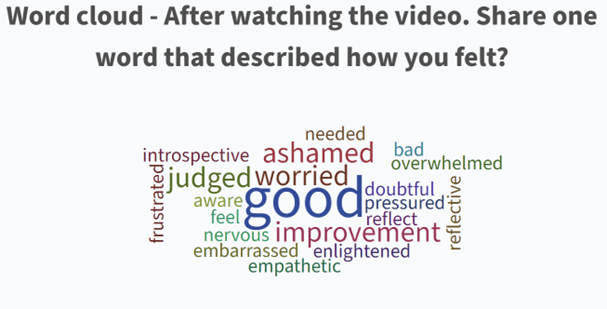
The audience was asked to give their reactions on how they felt after watching the video trailer. Evident below some said it would feel good. Presumably, those were the ones with 4 or 5 stars who would want others to see that they have been good, kind, and trustworthy. On the contrary, many noted they feel bad, ashamed, pressured, embarrassed, frustrated, worried, and even nervous.

Word cloud

Embracing Multi-Tiered System of Supports (MTSS)

The exercise gives us a glimpse into the thinking of students who have higher degree of absenteeism. Though we have embraced evidence-based practices like the Multi-Tiered System of Supports (MTSS) grounded in public health and framed as an organizing model for response and interventions, the model rates students. Upon reflection, it is a structure, which inadvertently labels students and limits service access based on that label. Thus, when trying to encourage students with prolonged absences to return and engage, they too feel bad, nervous, pressured, frustrated, ashamed, worried, judged, and so on. They feel their good may have been overlooked. The one or two wrong was judged incorrectly and there is no recovery.

Viewing Intervention through a New Lens

The topic my absence, your problem speaks to our response to interventions. We must be able to view interventions through a difference lens. For instance, simply adopting practice that became ‘best practices’ under curated circumstances to our own acculturated student body and resource-gaps is flawed. We must choose interventions to our situated context, leverage the data we have in defining DIY solutions, explore emerging practices in our own schools, and feel free to learn from others to curate our own circumstances. This is imperative because the students are finding themselves in tier 3 of the MTSS model are often less than 5% of our student bodies and require not wholesale interventions but as much specialized attention as possible.

 We cannot go any further without defining absenteeism. My definition of absenteeism is

“Absenteeism is the total sum of a student’s in-school and out-of-school experiences”

Each experience fuels the pull and push factor of the student’s engagement in school.

  • In-school experiences are everything in and about the school environment, everyone in the school environment and all decisions having to do with the school. The converse is also true,
  • Out-of-school experiences involves everything NOT in or about the school environment, persons in it, and decisions having to do with school.

Therefore, if absenteeism is a problem about experiences, then interventions must be about solving problems. The interventions must solve problems by those who have decision-making power for those who will be impacted through any means (activity, behavior, technology) to disrupt a chain or create an outcome.

My absence means my experiences have created a problem for which YOU must find a solution because it has created a problem for you in keeping me engaged in education. Prolonged absence and school avoidance is more about the school and people in it than the academics. The child still wants to learn and fit in but the dynamics in the school or getting to and staying in the school have affected this desire.

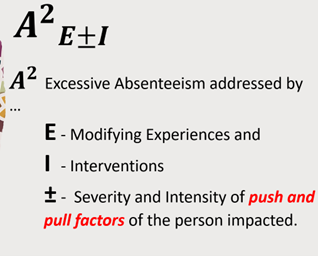
Schools are exceptional in defining and implementing interventions to create outcomes. However, there has never been a true formula simply to enable good or better outcomes for students versus old models of increased punishment. I offer one formula to aid in decision making. Assume A squared is defined as excessive absenteeism and our discussion on experiences and interventions. Then the formula would read A2 E + I.

Formula

Adjusting the Narrative of Control

The assumption being that anytime we have high rates of excessive absenteeism we would first aim to modify the student experiences in and out of school through interventions that are dialed up or down based on the severity and intensity of the push and pull factors impacting the student. In doing so we are clear that we know no number of in-school incentives will work with the student is absent and that holistic and targeted interventions are the best for the students where emphasize attention to people and services out-of-school to reengage through support, build school bonds, and better relationships. In the end control matters. Students who have moved from direct control to internal control do not respond to rewards and punishment nor pro-social relationships but to their own personal compass. As such, to reclaim them we must do the reverse. We must first appeal to their personal compass, what is important to them through out-of-school supports. Move into building pro-social relationships, which eventually moves them under a surveillance of influence where rewards and punishment can make an impact on decision-making.

Positive outcomes however depend on partnerships. Consider cross-system streaming to share and connect to out-of-school interventions and supports. When doing the intervention via:

DIY – Do. It. Yourself Method:

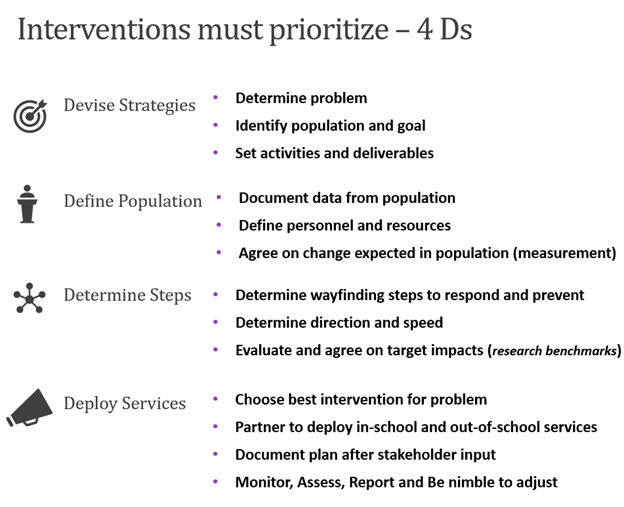
Be sure to leverage the current data you have and use the formula presented herein. Be sure to Devise, Define, Determine, and Deploy

4 D's

CURRENT EXAMPLES:

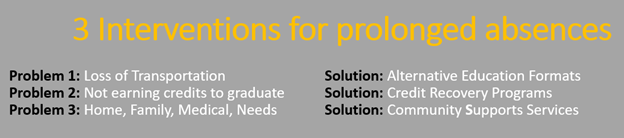
When using a method already in place it is important to ensure that there is a direct match between the defined problem and Solution like the examples below.

3 Interventions for prolonged absences

EMERGING PRACTICES:

There are many organizations responding to how to effectively meet students where they are. One area is in socio-emotional learning. Some have used training of staff and personnel (like GCSORED)while others have used technology, AI, and other software like (Fight for Life Foundation). The goal is the same identify the problem and match with solution to enable measurement.

2 Emerging Interventions

Relationships vs Punishment

Sadly, most interventions have been negative and punitive. We have data to show interventions like PBIS, MTSS, Science of Reading, Extra Curricular, etc. can change behavior but many times, we cannot define if the problem for which it was instituted has been solved. We must use the right type of interventions at the right time to make the best impact. Build relationships!

Dr. Carolyn Gentle-Gennity, PhD, Butler University
Carolyn Gentle-Genitty, PhD | Indiana University School of Social Work | cgentleg@iu.edu

About the Author

Dr. Carolyn Gentle-Genitty, founder, lead consultant, and Chief Education Officer for Pivot Attendance Solutions, has inspired many administrators, educators, students, and school social workers as a past chair of the school’s concentration Masters Curriculum, tenured professor, and Director of the Bachelors for Social Work Program. Having worked closely with Indiana Department of Education to assist school counselors in acquiring a school counselor license and coordinating curriculum mapping and application, she knows the intricacies of working with school-community partnerships. She has been a forerunner in responding to school absenteeism, truancy, and social bonding. She has over 30 years in youth development, 20 years in dropout and truancy and more specifically she brings over 12 years studying, researching, presenting, and writing about absenteeism locally, nationally, and internationally. In the US she is a leader in absenteeism and understanding school attendance problems and translating such into practice models for implementation. She is forging partnerships in colleges to establish the area as a formal field of study.

Federal & State Funding Opportunities

Understanding the world of education finance can be daunting for even the most seasoned of school and district leaders. The good news is, you don’t need to be a financial wizard to make fiscal decisions that will last a lifetime for your students by investing in attendance tracking and improvement technology. Implementing a robust digital platform that includes proactive and reactive strategies, multi-tiered interventions, high quality real time data, and two-way communications has proven to be the most effective approach to truancy abatement.

While chronic absenteeism preceded the pandemic and ballooned during, it has not quite bounced back in the aftermath (if we can even say we have fully reached post-pandemic status). According to the National Center for Education Statistics (July 6, 2022) “Compared to a typical school year prior to the start of the COVID-19 pandemic, 72 percent of U.S. public schools reported an increase in chronic absenteeism among their students. So, what’s happening? That’s what we’d all like to know. 

Attendance Tracking

Discovering the root causes of absenteeism, school refusal, chronic truancy, avoidance, or whatever other terms exist to describe the post-pandemic epidemic of student non-attendance is essential before allocating funding to address the issues. Since we know that there is no single or predominant reason, but rather an intricate mix of ingredients that contribute to truancy behaviors, addressing the problem systemically requires multi-pronged approaches. If we can reframe non-attendance as a symptom rather than “the problem” we can get closer to addressing the core of why many students have not returned post-pandemic. And only then does the conversation about resource allocation follow. 

Most schools and districts have not seen these incredible amounts of education funding coming through to mitigate the impacts of the Covid-19 pandemic in decades, if ever. Even so, dollars remain limited and often time-bound, so it’s important to leverage short-term activities with an eye on long-term solutions for attendance improvements. Distinguishing between limited-term revenue and ongoing funding can help leaders determine appropriate and sustainable allocations. 

Simply put, one-time dollars, otherwise known as “soft money” should only be spent on actions or items that are expected to fulfill short-term purposes. Ongoing dollars can be relied on for longer term applications. Covid relief funds, for example, such as the Coronavirus Aid, Relief, and Economic Security (CARES) Act, Coronavirus Response and Relief Supplemental Appropriations (CRRSA) Act, American Rescue Plan (ARP) Act, and Governor’s Emergency Relief Programs (GEER), all have a shorter shelf life than the annually distributed Elementary and Secondary Education Act (ESEA) Title I-IV funds. 

When adopting an attendance monitoring program, consider braiding different funding streams to cover your initial costs with limited-term funding, such as professional development and training, hardware purchases, technology infrastructure or upgrades, attendance incentive campaigns, or technical support. After you get up and running, ongoing funding can be used to pay for annual licensing/contracts for attendance and student information systems, support staffing, interventions, and communications. 

In my experience, most school and district leaders, outside of business services departments, confess that managing budgets is their least favorite part of the job—and one they weren’t often explicitly trained for. 

Try inverting your thinking from the traditional approach… 

“We have a grant allocation of $500,000 that lasts for three years; what can we buy?” 

…To a different mindset: “We have two major attendance issues to address—one for long-term truants and one for students who were previously attending but stopped after the pandemic.” Then ask these questions: 

  • What tools do we need to monitor and communicate attendance issues effectively?
  • Which funding sources can we tap that will address each major problem?
  • What kinds of support are necessary to move the needle for each group? 

Once you’ve asked and answered those questions, then the dollars will follow. And your inquiry before investment will pay off in the best ways for the students you serve.

About the Author

Kim Wallace, Professional Educational Consultant & Author at Process Makes Perfect

Born and raised in an educator household, Dr. Kim Wallace started her own career in public education 30 years ago as a high school English and history teacher before becoming a site principal and district office administrator. Her most recent K-12 role was as superintendent of one of the 20 largest school districts in California. 

Kim joined the UC Berkeley School of Education Leadership Programs division as the Associate Director of the 21st Century California School Leadership Academy (21CSLA) State Center in 2020. She also runs her own consulting company Process Makes Perfect, specializing in real world solutions for practitioners in the field. Kim consults, writes, and presents internationally on systems change and emerging trends in educational leadership. An award-winning, innovative educator, Kim leverages her abilities in educational administration, program management, and relationship development to optimize institutional effectiveness and deliver remarkable results.

Dr. Wallace’s book Leading the Launch: A Ten-Stage Process for Successful School District Initiatives was published by Solution Tree Press in 2021, followed by Leading Through an Equity Lens in 2023. Her upcoming book, Gamechanging Leadership in Action: An Educator’s Companion is in production with Routledge/Taylor & Francis (Fall 2025). Kim attended the University of California Santa Barbara for her undergraduate degree in history. She then earned her Master’s in Education (M.Ed.) at the University of California Los Angeles and culminated her educational goals with a Doctorate in Education (Ed.D.) from the University of California Davis.