In Alice ISD, attendance is more than a metric; it’s a reflection of how well the district removes barriers to student success. Serving nearly 5,000 students in South Texas, with 92.8% identifying as Hispanic and more than 84% economically disadvantaged, Alice ISD faces challenges that extend far beyond the classroom. Economic pressures, adolescent substance use, and the lingering effects of the pandemic have all fueled chronic absenteeism.

Rather than relying on punitive measures, Alice ISD built a systems approach that blends social work, mental health services, and community partnerships with real-time insights from the RaaWee Attendance+. This combination enables the district to identify issues early, mobilize resources promptly, and ensure that students are not only present but also fully supported in their learning journey.

A Vision Backed by Resources

In 2019, Alice ISD secured a $1.2 million School Climate Transformation Grant, a pivotal step in reimagining how the district approached attendance and student well-being. The funding enabled the district to expand its social work team, implement trauma-informed practices, and purchase telehealth services to address the increasing mental health needs of students.

The goal was clear: ensure that every campus has a dedicated social worker, creating equitable access to support for all students. By 2022, this vision became a reality.

Social Work at the Center

Alice ISD now has four licensed social workers and two case managers leading efforts to tackle chronic absenteeism through proactive and restorative strategies. Their work includes:

    • Conducting biopsychosocial assessments to identify barriers to attendance.
    • Delivering staff training on trauma-informed practices.
    • Offering alternative pathways, such as the FLEX program, to prevent students from dropping out due to economic pressures.
    • Leveraging the generalist intervention model to connect students and families with the right resources at the right time.

Attendance, once viewed as an isolated compliance issue, is now recognized as a shared responsibility among educators, families, and the community.

Building Community Partnerships

What sets Alice ISD apart is its ability to rally the community around student success. Partnerships span multiple sectors, including:

    • Local judges address truancy cases with a restorative, not punitive, lens.
    • Food banks provide weekend meals through backpack programs.
    • The Boys and Girls Club of Alice and the Community Action Corporation of South Texas are offering extended support beyond the school day.
    • Monthly community support meetings tackle sensitive but urgent topics such as suicide prevention, substance abuse, and healthy relationships.
    • These collaborations create a safety net that ensures students not only attend school but also thrive while they’re there.

A Case Study in Action

The district’s systems approach is best illustrated through individual stories. One case involved a 14-year-old student with excessive absences tied to substance use.

Through a comprehensive assessment, the social work team identified the root causes: lack of structure at home, failing grades, and access to synthetic marijuana. Rather than resorting to suspension, the district connected the student with substance abuse treatment, tutoring services, and wraparound supports.

The result? Improved attendance, stabilized grades, and a stronger connection to school.

This case highlights the district’s philosophy: addressing absenteeism requires meeting students where they are and engaging multiple systems, including school, family, and community.

Lessons for Other Districts

Alice ISD’s systems approach demonstrates that addressing chronic absenteeism necessitates more than attendance officers and automated calls home. It takes:

    • Data-driven early intervention through tools like Gaggle, which monitors for risks such as self-harm, bullying, and drug use.
    • Strategic investments in mental health and climate-building resources.
    • Partnerships that extend beyond school walls to address economic and social barriers.
    • A whole-child perspective that values belonging, support, and equity as much as compliance.

The key takeaway for other districts: when attendance strategies are grounded in empathy, backed by resources, and supported by the community, students show up, not just physically, but emotionally and academically ready to succeed.


Re-engaging students who leave school requires more than isolated outreach or end-of-year audits. It takes clear systems, cross-department alignment, and a belief that every student deserves a way back. Garland ISD’s approach to dropout recovery reflects exactly that: a structured, district-wide process rooted in consistency, collaboration, and opportunity. As a long-standing partner, RaaWee supports the district with the attendance insights and workflows that help teams respond earlier and more effectively.

Angela Daniels, the Student Engagement Administrator at Garland ISD, shared how intentional systems and shared ownership have strengthened the district’s ability to find, re-engage, and support students who disconnect from school.

A Purpose-Driven Approach: “Operation Opportunity”

One of the first changes Daniels made was renaming the initiative to Operation Opportunity. The goal was simple: shift the mindset from compliance to hope. The name helped teams approach families with encouragement, making conversations more productive and welcoming for students considering a return.

To support this district-wide mindset, Daniels created a visual manual that clearly outlines each step in the recovery process. This guide equips staff and volunteers with consistent language, expectations, and workflows, reducing guesswork and helping new participants get up to speed quickly.

A Structured Process That Supports Every Student

Garland ISD relies on a timeline that guides recovery work throughout the year. This ensures the district is reviewing records, confirming student locations, and initiating outreach long before annual audits.
Key components of the system include:

    • Phone banks to reconnect with students and families
    • Home visits to locate individuals who have moved or lost contact
    • Organized volunteer efforts during peak recovery periods
    • Dedicated funding and staffing so teams have the capacity to follow every lead

The process continues until the district can verify each student’s status: moved, transferred, re-enrolled, or in need of additional support.

District-Wide Collaboration as the Foundation

Effective dropout recovery depends on coordination across multiple roles. Daniels highlighted how Garland ISD brings together:

    • Campus administrators
    • Counselors
    • Attendance and PEIMS teams
    • Community liaisons
    • District-level departments

This alignment ensures accurate information, faster responses, and smoother re-enrollment experiences for students returning to school.

Celebrating Progress to Sustain Momentum

Dropout recovery work is ongoing and often demanding. Recognizing teams and campuses that successfully bring students back is very important. Celebrations maintain energy, reinforce shared ownership, and keep the work visible across the district.

Action Steps Districts Can Implement Now

Based directly on Daniels’ practices and recommendations, districts looking to strengthen their recovery systems can focus on:

    • Assessing team beliefs about students returning and identifying local barriers
    • Reviewing dropout data consistently throughout the year
    • Expanding the recovery team to include community partners such as libraries, apartment complexes, or city offices
    • Celebrating successful returns to reinforce a culture of persistence and possibility

These steps create clarity, consistency, and shared accountability, all critical for improving student re-engagement.

Creating Pathways Back to Opportunity

Garland ISD’s work illustrates how a district-wide process can transform dropout recovery into a coordinated, hopeful, and effective system. By following clear workflows, collaborating across departments, and maintaining a mindset that every student can return, the district ensures students receive the support they need to reconnect with school. With tools like RaaWee Attendance+, district teams gain actionable insights and practical guidance, making it easier to track, support, and re-engage students efficiently.

About the Presenter

Angela Daniels, M.Ed., Student Engagement Administrator, Student Services, Garland ISD, TX

Angela is a former Intervention Coordinator and teacher with 20 years of experience developing unique opportunities to help all students succeed. She has led initiatives that have reduced dropout rates and enhanced student engagement. She holds certifications in Education Leadership and Dropout Prevention.

In the Plano Independent School District, attendance is more than just a number, it’s the foundation for student success, school funding, and community growth. With 73 campuses serving 48,000 students who speak 82 different languages, the district faces complex challenges around chronic absenteeism. Yet, by weaving together communication, family engagement, and strategic partnerships, Plano ISD is building a model of how districts can maintain high attendance rates while supporting diverse student needs.

A Clear Vision: 96% Attendance for All Students

Plano ISD has set an ambitious but achievable goal: maintaining a 96% or higher attendance rate across all student groups. This commitment reflects a district-wide belief that consistent attendance is essential for learning, equity, and long-term achievement.

To support this vision, district leaders developed a comprehensive action plan that integrates early identification, tiered interventions, and campus-level accountability. Attendance is no longer treated as an isolated issue but as a shared responsibility across teachers, principals, families, and community partners.

Meeting the Challenges of a Diverse District

Plano ISD has experienced a significant rise in its emerging bilingual population since 2015. Recognizing that language can be a barrier to engagement, the district prioritizes multilingual communication, from newsletters to social media updates, so every family feels seen and supported.

The emphasis on clear, caring communication is woven into every touchpoint. Instead of traditional tardy slips, the district now issues “welcome slips”, a small but powerful shift that reframes attendance as belonging rather than punishment.

Partnerships that Drive Engagement and Funding

A standout feature of Plano ISD’s strategy is its ability to rally the community around attendance. Partnerships extend across:

  • Local businesses and faith-based organizations that provide wraparound support for families.
  • Professional sports teams like the Dallas Mavericks, who reward students with game tickets for strong attendance.
  • Education foundations and nonprofits, which help fill gaps in funding and services.

These partnerships not only incentivize students but also strengthen public awareness of why attendance matters. The district has even tracked the financial impact, noting $300,000 in savings linked to improved attendance interventions.

Engaging Families as Partners

Parents are central to Plano ISD’s attendance improvement efforts. Through surveys like the family partnership essay, the district gathers direct feedback on barriers families face and resources they need. Parent liaisons host in-person sessions, helping families connect the dots between attendance and long-term academic outcomes.

By creating opportunities for two-way communication, the district ensures solutions aren’t just top-down but co-created with families who understand their children’s unique challenges.

Restorative Practices and Wraparound Services

Plano ISD’s efforts go beyond monitoring attendance numbers. Restorative practices and the Plano Attendance Review Board give students and families the chance to address underlying challenges, whether social, emotional, or economic. Counselors and social workers provide wraparound services, ensuring students not only show up to school but are also ready to learn.

Recognizing and Celebrating Progress

To keep momentum strong, Plano ISD celebrates schools that make gains through its Attendance Campus Champions program. Competitive elements, posters, and monthly recognition help keep attendance top of mind for staff and students alike.

Lessons for Other Districts

Plano ISD’s approach shows that tackling chronic absenteeism requires a balance of data-driven strategy and human-centered engagement. By aligning communication, partnerships, and restorative supports, the district is making attendance a shared community priority.

The takeaway for other districts? Attendance improves when families feel supported, students feel celebrated, and the community feels invested.

About the Presenter

Sharon Bradley is a Texas education leader with more than 25 years of experience in student engagement, equity, and dropout prevention. She has served as a teacher, principal, and district administrator, leading initiatives that significantly reduced chronic absenteeism and built stronger systems of support for students and families. Widely recognized for her innovative and equity-driven approach, Sharon has been honored nationally for her impact in helping districts reimagine attendance and student success. She now serves as a Principal Consultant at RaaWee K12.

Improving attendance requires more than tracking absences. It demands accurate data, an equity-driven lens, and systems that turn insights into action. Across districts, leaders are rethinking how they collect, interpret, and use attendance data to address the root causes of absenteeism and build environments where every student is supported to succeed.

When data practices are intentional and integrated, schools can move from compliance-driven reporting to meaningful change.

Keeping Equity at the Heart of Attendance Work

Attendance data often reflects more than student choice, it reveals barriers rooted in systemic inequities, family instability, and school climate. Without an equity lens, data can unintentionally reinforce stereotypes or overlook the challenges faced by marginalized students.

Districts are adopting data equity walks; structured reviews of attendance data that highlight patterns across student groups and surface barriers that might otherwise be invisible. By asking how data is presented, not just what it shows, leaders can ensure attendance strategies remain student-centered. 

Building a Culture of Continuous Improvement

Edwards Deming once said, “Without data, you’re just another person with an opinion.” In attendance work, this principle is more than theory, it’s the backbone of effective, ongoing improvement. The Deming Cycle, a Plan–Do–Study–Act model, offers districts a proven way to move from identifying problems to testing solutions and refining them for lasting impact.

RaaWee also uses the Deming Cycle within Attendance+, embedding this same continuous improvement model to help schools align data collection, analysis, and interventions in a structured loop. This approach ensures that attendance strategies evolve with the data, supporting timely adjustments and long-term improvement.

Why Data Integrity is Non-Negotiable?

The foundation of strong attendance practices is accurate, trustworthy data. Without it, interventions may be mistimed or misdirected, and in some cases, student safety may even be compromised.

Districts are strengthening integrity by:

  • Ensuring timely, secure data entry
  • Cross-checking and verifying accuracy
  • Standardizing absentee codes
  • Training staff consistently
  • Holding teams accountable for data quality

Environmental factors such as wildfires, extreme weather, and other disruptions further underscore the need for reliable systems that adapt to real-world conditions.

Stronger Systems for Smarter Attendance Decisions

Common challenges such as missing categories, overlapping entries, and non-standard collection practices often compromise the quality of attendance data. The solution lies in integrated systems that connect attendance with broader student supports like PBIS (Positive Behavioral Interventions and Supports) and wellness programs.

When organized clearly, attendance data becomes more than a tally. It becomes a decision-making tool that reveals patterns, guides interventions, and ensures no student is overlooked.

Pairing Data with Student and Family Insights

Numbers alone don’t tell the full story. Districts are increasingly combining quantitative data (attendance rates, ADA, chronic absence percentages) with qualitative insights (surveys, focus groups, empathy interviews).

For example, some districts segment student absences into categories like school refusal, school avoidance, or health-related withdrawals then pair those findings with family feedback. Data consistently shows that students from stable families have higher attendance, underscoring the importance of wraparound supports that extend beyond the classroom.

This mixed-methods approach transforms raw numbers into human-centered insights that can shape smarter interventions.

Action Items for District Leaders

Forward-thinking districts are aligning on a clear set of best practices for attendance improvement:

  • Take an inventory of current data practices and identify gaps.
  • Monitor protocols to ensure consistent usage across schools.
  • Analyze patterns by subgroup, grade level, and time period.
  • Engage in data-informed equity walks to surface systemic barriers.
  • Simplify data for decision-making so it’s usable by staff, families, and community partners.

Participate in national efforts like the Attendance USA initiative, which is building certification and standards for attendance training.

Building Supportive Environments

Data only creates change when it inspires action. Districts are increasingly using storytelling and visualization; infographics, dashboards, and narrative framing to make attendance data more compelling and accessible.

At the same time, PBIS frameworks are being leveraged to address barriers such as bullying, unsafe environments, or transportation gaps. Restorative practices, like re-entry circles, further build belonging and re-engagement for students returning from suspension.

Wellness-centered approaches also emerged as essential. By segmenting student needs and tailoring support from large-scale system responses to targeted interventions, schools can address the diverse reasons students miss class.

Turning Attendance Insights into Lasting Impact

Attendance is more than a compliance metric. It is a mirror of how well schools are meeting the needs of their students and families. When districts combine equity-driven analysis, accurate data, and actionable systems, attendance becomes a lever for academic success and student well-being.

Solutions like RaaWee Attendance+ help districts operationalize these strategies; integrating data, streamlining interventions, and empowering teams to act with consistency and care.

Because at the end of the day, improving attendance isn’t about numbers. It’s about ensuring that every day, every student, truly matters.

About the Presenter

Dr. Kim Wallace, Professional Educational Consultant & Author at Process Makes Perfect

Born and raised in an educator household, Dr. Kim Wallace started her own career in public education 30 years ago as a high school English and history teacher before becoming a site principal and district office administrator. Her most recent K-12 role was as superintendent of one of the 20 largest school districts in California. 

Kim joined the UC Berkeley School of Education Leadership Programs division as the Associate Director of the 21st Century California School Leadership Academy (21CSLA) State Center in 2020. She also runs her own consulting company Process Makes Perfect, specializing in real world solutions for practitioners in the field. Kim consults, writes, and presents internationally on systems change and emerging trends in educational leadership. An award-winning, innovative educator, Kim leverages her abilities in educational administration, program management, and relationship development to optimize institutional effectiveness and deliver remarkable results.

Dr. Wallace’s book Leading the Launch: A Ten-Stage Process for Successful School District Initiatives was published by Solution Tree Press in 2021, followed by Leading Through an Equity Lens in 2023. Her upcoming book, Gamechanging Leadership in Action: An Educator’s Companion is in production with Routledge/Taylor & Francis (Fall 2025). Kim attended the University of California Santa Barbara for her undergraduate degree in history. She then earned her Master’s in Education (M.Ed.) at the University of California Los Angeles and culminated her educational goals with a Doctorate in Education (Ed.D.) from the University of California Davis.


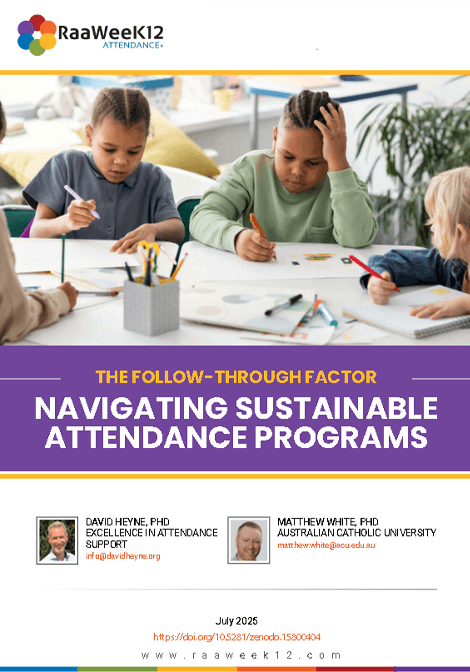
Every school year begins with momentum. New teams form, attendance campaigns launch, and for a while, numbers improve. But too often, those early wins fade. Staff turnover, shifting priorities, and short-term fixes can leave districts feeling like they’re starting over each year.

The real challenge isn’t just improving attendance in the short term, it’s making those gains last. Sustainable attendance programs require more than energy at the start; they need a framework that endures.

From Short-Term Fixes to Long-Term Culture

Quick campaigns can boost attendance temporarily, but sustainability comes from embedding attendance into the culture of a school or district. That means shifting from “projects” to systems that support students year after year, even as staff changes, funding cycles end, or new challenges emerge.

When attendance is treated only as a number to hit, students risk being reduced to data points. But when it’s embedded in the culture, attendance becomes about belonging, engagement, and student well-being.

Five Principles for Sustainable Attendance

Research in implementation science and district practice highlights five principles that separate short-lived initiatives from long-lasting impact:

Vision: Define What Success Looks Like

A strong vision goes beyond compliance targets. It paints a clear picture of what sustained attendance success means for students, families, and staff, and keeps everyone rowing in the same direction.

Leadership: Shared Responsibility at Every Level

Principals may set the tone, but sustainable change requires distributed leadership. Attendance teams, district leaders, and community partners all play a role. As emphasized in earlier Guess Less, Know More insights, the attendance pyramid provides a structure for supporting students at every level of need but leadership ensures the pyramid is more than theory.

Partnership: Students, Families, and Communities as Co-Creators

Sustainable attendance programs are built through enduring partnerships, where students are not just beneficiaries but partners, parents are engaged as problem-solvers, and communities provide the support network that schools alone cannot.

Training and Support: Investing in People

Programs fade when staff lack time, tools, or training. Ongoing professional development, coaching, and collaboration ensure that even as personnel change, the practices and culture remain strong.

Adaptation: Balancing Fidelity and Flexibility

Sustainability isn’t about repeating the same practices forever. It’s about holding onto core elements while adapting to shifting needs; demographics, technologies, or unexpected disruptions. Continuous improvement cycles keep programs relevant.

Where Technology Strengthens Sustainability

Digital infrastructure makes sustainable programs possible. Platforms like RaaWee Attendance+ give leaders the tools to:

  • Monitor data in real time and refine strategies.
  • Coordinate interventions across schools and districts.
  • Automate communication with families while keeping it personal.
  • Track and document interventions, so effective practices are not lost with staff changes or turnover.

By providing both clarity and continuity, technology helps schools stay the course when enthusiasm alone isn’t enough.

From Attendance to Engagement

At its core, sustainable attendance programs are about more than presence, they are about connection. When students feel seen, supported, and valued, attendance becomes a byproduct of belonging.

Short-term gains can inspire confidence. But long-term sustainability ensures that attendance programs deliver on their true promise: helping every student not just show up, but thrive.

David Heyne
Dr. David Heyne, PhD

Dr. DAVID HEYNE, PHD

With over 30 years of experience in the field of school attendance, Dr. David Heyne brings diverse expertise spanning practical, research, and scholarly work. He is co-founder and executive team member of INSA (the International Network for School Attendance), co-founder of the KNSA (Dutch Knowledge Network for School Attendance), and offers freelance services through Excellence in Attendance Support, actively collaborating with professionals to make a positive impact on school attendance and young people’s relationship with education and well-being.

Currently serving as Honorary Associate Professor at Deakin University in Australia, David’s academic journey includes roles at the University of Melbourne and Monash University in Australia, and more recently, at Leiden University in the Netherlands.

MATTHEW WHITE, PHD AUSTRALIAN CATHOLIC UNIVERSITY
Dr. Matthew White

Dr. MATTHEW WHITE, PHD

Matthew is a lecturer and researcher in Inclusive Education. He is an experienced teacher and school system leader. He has held roles guiding inclusive education and school attendance. His experience also includes supporting national and cross sector school policy as a senior policy officer with the NSW Department of Education.

His research centres on the interconnection of school wellbeing and inclusion, with a strong emphasis on multi-tiered system of supports and supporting students with attendance difficulties. His PhD study “Support for Students with Learning Difficulties Through a Universal Intervention Framework” examined the effectiveness of a systems approach to supporting the academic self-concept of adolescents with learning difficulties”.

Matthew is particularly passionate about implementation science and the embedding of effective practices across educational settings.

Addressing chronic absenteeism requires more than monitoring data, it demands real connection with the students behind the numbers. In Louisiana, a new collaborative model is transforming how schools respond to absence, centering engagement at every level: student, family, and community.

By focusing on agency, belonging, and connection, Louisiana’s approach shifts the focus from punitive interventions to proactive, personalized support. The results speak for themselves: in one pilot district, chronic absence decreased by 40%, and average daily attendance (ADA) climbed from 70% to over 90%.

Addressing Root Causes

Chronic absence doesn’t happen in a vacuum. Students often miss school due to complex psychosocial factors; stress, fear, bullying, or unstable home environments. Recognizing this, Louisiana education leaders drew on trauma-informed practices to design interventions grounded in empathy and understanding.

Students don’t drop out overnight. They disengage slowly, often in silence. By recognizing early signs like school avoidance, educators can intervene with empathy and support before that disengagement becomes irreversible.

Attendance Teams and Tiered Supports

At the heart of Louisiana’s strategy is a statewide attendance workbook designed in collaboration with LSU’s Social Research and Evaluation Center. It offers a step-by-step guide for building effective school-level attendance teams, not just at the district or system level.

These teams use tiered levels of support to respond to students’ needs while avoiding the trap of “tiering” students themselves. With regular data analysis (including ADA, truancy rates, and chronic absence breakdowns by student population), schools can target their efforts where they are needed most.

The Empathy Interview Approach

One of the most effective strategies highlighted in the model is the use of empathy interviews. These conversations with students and families uncover personal and systemic barriers to attendance; from transportation issues to anxiety and safety concerns.

This insight leads to smarter interventions, such as:

  1. Creative scheduling and flexible learning options
  2. Providing resources in families’ home languages
  3. Reframing communication to avoid punitive or legalistic language

Even something as simple as recognizing improved attendance rather than just perfect attendance helps build momentum and motivation.

Creating a Culture of Belonging

Schools are reimagining what meaningful family engagement looks like. Instead of one-off events, they are incorporating family voices into school culture year-round: honoring cultural months, celebrating milestones, and calling home not just when things go wrong but to say thank you.

Schools that embed belonging into their culture see higher engagement from both students and families. This includes aligning with local community resources, crafting compelling sponsorships, and ensuring families feel like partners in their child’s education not spectators.

Turning Insight into Action

The triad approach engaging students, families, and communities does more than reduce absence. It builds stronger school ecosystems where students feel seen, families feel respected, and educators are supported with real tools and data.

To make these strategies sustainable and scalable, districts are turning to tools like RaaWee Attendance+. These solutions help operationalize insights, enabling school teams to move from intention to impact with consistency, care, and real-time data.

As more districts adopt this model, the shift from reactive attendance policies to restorative engagement practices continues to gain momentum. And with the right tools and mindset, every school can create a culture where every day and every student truly matters.

About the Presenter

Shelneka Adams-Marsalone serves as the Child Welfare & Attendance Liaison at the Louisiana Department of Education.

In this role, she guides statewide initiatives to reduce chronic absenteeism by shifting from punitive approaches to restorative, student-centered practices. She works closely with districts to equip child welfare and attendance professionals with tools that strengthen family engagement and build positive school climates.

A strong advocate for the RESET model (Restoring Every Student, Every Teacher), she champions strategies that keep students connected to learning and address root causes of absence. Her work reflects a deep belief that attendance is not just about compliance, but about ensuring every child feels supported, valued, and capable of success.

Summary

Mr. Carampatan from Aldine ISD presented strategies to boost student attendance and combat absenteeism, emphasizing the importance of RaaWee Attendance+ tools. The district saw a 1.08% increase in ADA, with 52% of campuses achieving at least a 1% growth. RaaWee’s warning letters and attendance contracts significantly improved attendance. The district’s plan involved data-driven decisions, weekly monitoring, Triad’s parental support, and monthly rewards to boost attendance.

Data-Driven Absenteeism Reduction

Aldine ISD implemented RaaWee Attendance+ to enhance student attendance across 83 campuses. After a year of use, the district saw a 1.08% increase in Average Daily Attendance (ADA), with 52% of campuses achieving at least a 1% improvement. Automated warning letters and attendance contracts played a crucial role in this success.

Stakeholder Collaboration and Strategic Planning

Aldine emphasized a structured approach by defining roles, engaging stakeholders, and leveraging data from E-School for decision-making. Weekly monitoring, structured support, and positive reinforcement, such as financial incentives and monthly competitions, sustained progress.

Targeted Attendance Support for Schools

To address varying attendance challenges, campuses were categorized using SAC criteria. Schools with higher absenteeism received tailored action plans and additional support to drive improvement.

Utilizing RaaWee Attendance+ for Effective Interventions

RaaWee  Attendance+ streamlined attendance tracking, automated alerts, and ensured timely interventions. The district also partnered with Triad, a Harris County service, to provide parental training and prevent truancy.

Sustaining a Culture of Accountability

Aldine ISD ensured a smooth implementation through clear communication and phased rollouts. By celebrating successes and refining strategies, the district continues to foster a culture of accountability and engagement, applying consistent attendance policies across all grade levels.

About the Presenter

Paul Carampatan, Director of School Administration at Aldine ISD.

Paul Carampatan is dedicated to student success as the Director of Student Services at Aldine ISD in Texas. He oversees programs that support diverse student needs and focuses on equity and access.

With over a decade of experience in educational administration, Paul collaborates with teachers, parents, and community partners to foster a supportive environment. He advocates for mental health awareness and social-emotional learning.

In his free time, Paul enjoys family activities and exploring Texas’s cultural diversity, making a positive impact on Aldine ISD students.

Strategies to Tackle Chronic Absenteeism

Hedy Chang from Attendance Works discussed tackling chronic absenteeism post-pandemic through empathy interviews, student focus groups, and a tiered support system. She also referenced the ‘Back to the Classroom’ report by the Ad Council Research Institute, highlighting the importance of positive, supportive messaging. To reduce chronic absenteeism by 50% over five years, Chang emphasized the need for systemic, data-informed strategies, an approach shared by RaaWee Attendance+, which supports schools in making informed, student-centered attendance interventions.

understanding the Root Causes of Chronic Absenteeism
Hedy Chang from Attendance Works emphasized the critical need to understand why students miss school, advocating for tools like empathy interviews, student focus groups, and attendance cafés to gather meaningful insights. She highlighted a post-pandemic surge in chronic absenteeism driven by weakened learning conditions, such as reduced student engagement, safety concerns, and a lack of belonging.

Tiered Support Systems for Sustainable Change
Chang introduced a tiered support system to address absenteeism, beginning with foundational strategies like clear communication and positive reinforcement, and escalating to more targeted interventions. 

Positive Messaging and Trusted Relationships
Referencing the “Back to the Classroom” report by the Ad Council Research Institute, Chang emphasized the power of positive, supportive messaging over shaming families. She underscored the importance of trusted messengers like teachers in effectively communicating the value of attendance. 

A Nationwide Commitment to Reducing Chronic Absenteeism
Chang proposed a nationwide goal of reducing chronic absenteeism by 50% over five years, a vision already backed by 14 states and Washington, D.C. She called on districts to adopt this goal and work with community partners to build long-lasting, systemic improvements. Like RaaWee Attendance+, Chang’s vision centers on using data-informed strategies and community engagement to drive meaningful, long-term change in student attendance.

About the Presenter

Hedy Chang is the founder and executive director of the nonprofit initiative, Attendance Works. Founded in 2010, Attendance Works is the nation’s go-to resource for attendance policy and practice. A skilled presenter, facilitator, researcher and writer, Hedy co-authored the seminal report, Present, Engaged and Accounted For: The Critical Importance of Addressing Chronic Absence in the Early Grades, as well as numerous other articles about student attendance. 

Deeply committed to promoting two-generation solutions to achieving a more just society, Hedy has spent over three decades working in the fields of family support, family economic success, education and child development. She served as a senior program officer at the Evelyn and Walter Haas Jr. Fund and as co-director of California Tomorrow. Hedy has a Master’s degree in Public Policy from the Kennedy School of Government at Harvard University and B.A. from Occidental College. In 2024, Hedy was named as the Policy Leader of the Year by the National Association of State Boards of Education. 

In the US, she is a leader in absenteeism, understanding school attendance problems and translating this into practice models for implementation. She is forging partnerships in colleges to establish the area as a formal field of study.

MSD Warren is taking intentional steps to improve student attendance through a tiered intervention model grounded in structure, early action, and cross-team collaboration.

At the center of their approach is a strong belief: showing up matters and it takes an entire system to make that happen consistently.

A Cross-Functional Attendance Team

The district has built a multi-layered attendance team that includes the Assistant Superintendent, Director of Student Services, Chief Technology Officer, and other key leaders. This team meets weekly to review data, assess interventions, and coordinate responses.

At the school level, counselors and administrators join the effort, ensuring that every tier of support is grounded in shared responsibility.

Clear meeting cadences, defined roles, and consistent review of referrals keep the system aligned and proactive.

Tiered Attendance Interventions

MSD Warren Township uses a three-tiered intervention framework to address student absenteeism:

  • Tier 1 focuses on universal support; such as timely and accurate attendance tracking and re-engaging students when they return from absences. 
  • Tier 2 includes targeted, school-level support for students with rising absence trends. 
  • Tier 3 delivers intensive interventions for chronically absent students, often involving external partners and family conferences. 

By escalating support based on student need, the district ensures that interventions are responsive, not reactive. 

Real-Time Data to Guide Action

To support accurate tracking and intervention planning, the district uses RaaWee Attendance+. The platform helps teams manage attendance data, review referrals, and suppress absences when needed, such as in cases involving medically homebound students.

Systems That Move the Needle

MSD Warren Township emphasizes execution and accountability through weekly team meetings and strategic planning. They have adopted principles from The 4 Disciplines of Execution framework by Chris Hennessy and Sean Covey to focus on a few high-impact goals at a time, ensuring that everyone, from central office to campuses is working toward shared outcomes.

This system-level alignment strengthens consistency and helps build a sustainable attendance culture across the district.

Community Partnerships and Wraparound Supports

Recognizing that absenteeism often stems from outside the classroom, MSD Warren Township has opened the door to grassroot organizations and community agencies. These partners support students through mentoring, art therapy, and respite programs, all coordinated through the district’s centralized resource center.

During attendance meetings, families are connected with community-based supports that address broader challenges from mentoring to mental health, helping the district respond more holistically to chronic absenteeism.

A Unified Response Rooted in Support

MSD Warren Township’s strategy shows what’s possible when structure, data, and community come together with purpose. Through its tiered approach and focus on real-time action, the district is doing more than tracking attendance, it’s building a culture of support that helps every student feel seen, valued, and encouraged to show up.


About the Presenter

James Taylor serves as the Director of Student & Social Services at MSD Warren Township in Indianapolis, Indiana. With over a decade of experience in K–12 student support, he leads district-wide initiatives focused on attendance improvement, equity, and wraparound services. As the McKinney-Vento Liaison, James champions proactive interventions for students experiencing housing instability, and has been nationally recognized for his work in reducing truancy and promoting student well-being.

About the Presenter

Jessica Daniels, MSW, serves as a Program Navigator at the Moorhead Community Resource Center for MSD of Warren Township (Indianapolis, IN). With a Master’s in Social Work, she guides families and students through support services, connecting them to essential community resources. Jessica plays a pivotal role in advancing attendance and engagement initiatives by addressing social‑emotional barriers and ensuring equitable access to wraparound supports.

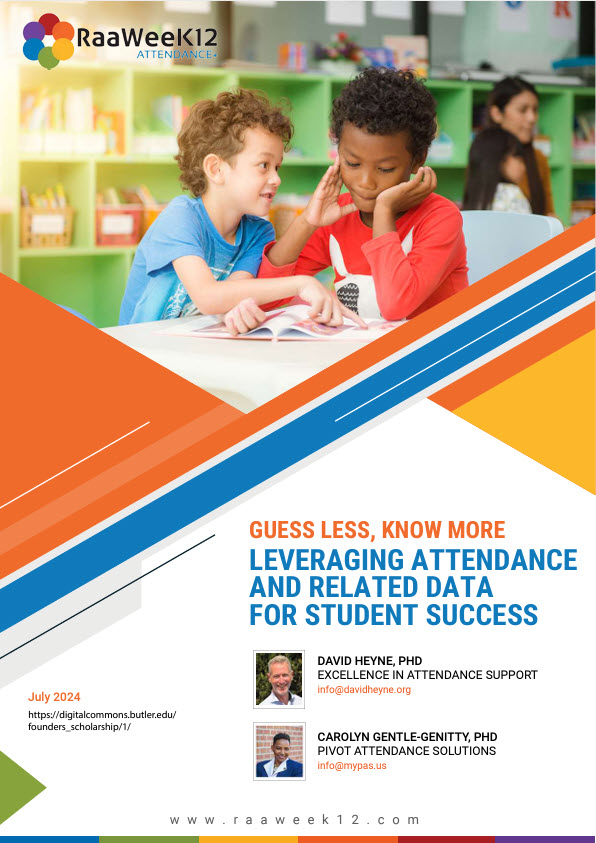
What if schools could spot attendance issues before they became patterns? What if student data didn’t just describe the past but helped shape better futures?

Across education systems, the call for smarter student support is growing louder. And as this Guess Less, Know More white paper points out, the difference between reactive and proactive support often comes down to one thing: how data is used.

Why Attendance Data Often Falls Short

Schools gather data every day. But collection alone doesn’t drive outcomes. Without the tools, time, and mindset to make sense of the numbers, valuable insights go unnoticed and students in need remain unsupported.

From inconsistent reporting practices to outdated systems and limited training, there’s a disconnect between what schools have and what they need to take informed action. This white paper, informed by voices across North America, Europe, and Australia, offers a clear message: data is most powerful when it’s used intentionally and in context.

From Data to Action

To move from compliance to connection, the education sector needs to reframe how it thinks about attendance information.

1. Normalize a culture of curiosity
Data shouldn’t be a burden. When teachers and staff see it as a tool for connection and problem-solving not paperwork, it begins to support real change.

2. Build consistency into collection

Standardizing attendance categories and reporting practices across schools and districts makes data more meaningful and more actionable.

3. Go beyond surface-level

Dig deeper. Look at absence patterns by grade level, demographics, or even day of the week. Often, the real story lives just below the surface.

4. Create space for shared ownership

When counselors, administrators, and family liaisons have shared access to data, interventions become more timely and tailored. Collaboration turns insight into impact.

Smarter Infrastructure Enables Smarter Support

Behind every successful intervention is a system that makes it possible. The paper emphasizes the growing importance of intervention management systems digital platforms designed not just to track data, but to help schools use it.

These tools enable schools to:

  • Identify students in need of support earlier
  • Automate outreach while keeping it personalized
  • Document and refine intervention strategies over time
  • Provide a fuller picture of student progress, beyond attendance alone

Some districts are already leveraging this shift through platforms like RaaWee Attendance+, which help streamline communication, track interventions, and surface insights in real-time, all while reducing manual workload. 

Where Data Meets Relationships

At the heart of every data point is a student. A real person with challenges, context, and potential.

The Guess Less, Know More approach doesn’t stop at tracking presence, it looks at participation, engagement, and progress. By layering in insights from student surveys, academic performance, and even home-school connection metrics, schools can move from surface-level fixes to meaningful, sustainable support.

Because when we stop guessing and start knowing, we don’t just improve attendance. We help students show up and thrive. 

Curious What This Looks Like in Practice?

See how our solutions can help your district act on the data you already have.
Get a Demo to know how streamlined intervention can support every student’s journey. 

David Heyne
Dr. David Heyne, PhD

Dr. DAVID HEYNE, PHD

With over 30 years of experience in the field of school attendance, Dr. David Heyne brings diverse expertise spanning practical, research, and scholarly work. He is co-founder and executive team member of INSA (the International Network for School Attendance), co-founder of the KNSA (Dutch Knowledge Network for School Attendance), and offers freelance services through Excellence in Attendance Support, actively collaborating with professionals to make a positive impact on school attendance and young people’s relationship with education and well-being.

Currently serving as Honorary Associate Professor at Deakin University in Australia, David’s academic journey includes roles at the University of Melbourne and Monash University in Australia, and more recently, at Leiden University in the Netherlands.

Dr. Carolyn Gentle-Gennity, PhD, Butler University
Dr. Carolyn Gentle-Genitty

Dr. CAROLYN GENTLE-GENITTY, PHD

Dr. Carolyn Gentle-Genitty is a social work scholar, youth advocate, and higher education leader with over 25 years of experience. She holds a PhD in Social Work from Indiana University, where her research focused on truancy and school social bonding.

She currently serves as the inaugural dean of Founder’s College at Butler University, a program dedicated to expanding access to higher education. A former Assistant Vice President at Indiana University, Dr. Gentle-Genitty is also the founder of Attendance USA and a prolific researcher with expertise in school attendance and academic policy.

Her work continues to influence policy, research, and practice in education and youth development.