Abstract

Data is only as effective as the use it is put to. Often, data collected in K-12 schools is siphoned from data lakes and warehouses to meet state and federal compliance requirements, rather than being collected with the intent to act upon it. As a result, schools have accumulated large datasets, but they still struggle to report on impactful progress for early student intervention.

With local control, schools have the opportunity to decide the story they wish to tell with their data. While meeting compliance requirements, there can be a duality in data collection, where the data is not always collected to be acted upon.

To address this challenge, the session used a workshop format to guide participants through answering 10 questions, the most crucial being, “What story do you want your data to tell?” Researchers often use these types of questions to determine data collection protocols and define hypotheses.

Ultimately, data must offer a TIP (Train, Interpret, Problem-solve) to its users. Data must help solve problems. If we cannot Train it, Interpret it, or use it to solve Problems, it is essentially useless.

TIP Strategy

Introduction

Yuk! Math! Like math, data is a love-hate relationship, until basic tenets help you to …Train , Interpret, and Problem-solve (TIP). There is ambivalence with data. Though we ravel in what it can do and what it can say, we hesitate to engage for fear of misunderstanding, error, or embarrassment from getting it wrong. Instead, we hire it out, pass it along, and leave collection and monitoring to someone else for someone else. The fact is when data is collected to meet an external purpose, retrofitting it to aid in intervention may be misleading at best. Recycling anything suggest the ‘thing’ is being used for something different than what it was intended. The same is true with data. Simply repurposing won’t get you the right answers to influence the change or progress you need to make. Therefore, we must know what is expected, what story we want to tell, and what impact or outcomes we want to see. 

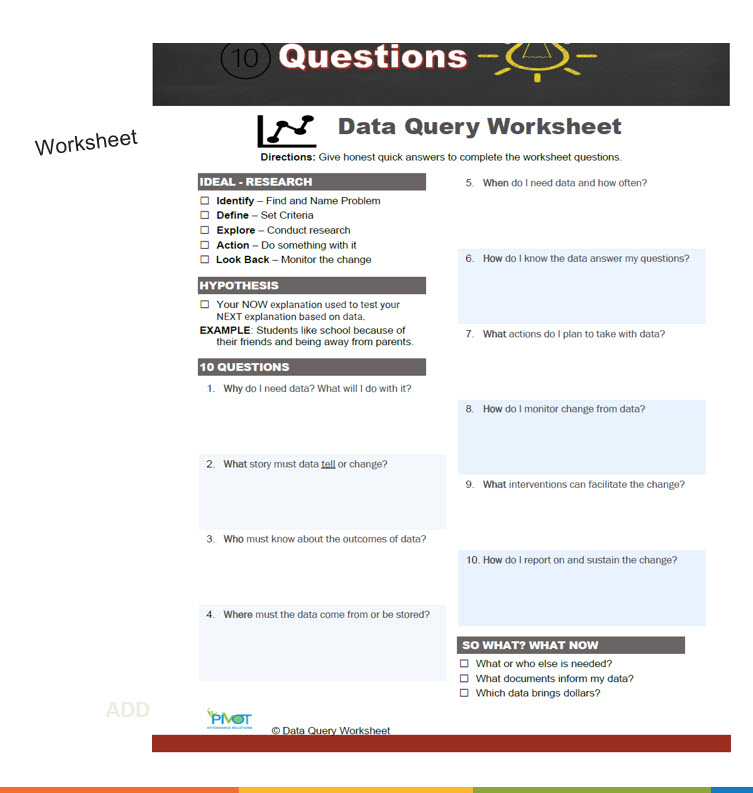
Engagement is required. And the below Worksheet will assist you in engaging your entire team in the process and the IDEAL model. Click here or below to download the Worksheet.
Problem Solving

Basic Research

The IDEAL model (Identify, Define, Explore, Action, Look back) is a popular and simplistic approach used to engage with basic research tenets. The idea is that data collected must have a purpose and work to solve a problem. To ensure it does exactly that, it is essential to establish criteria for inclusion or exclusion and explore how best to collect and analyze the information for action. Once done, it is important to reflect on your progress to determine if more data is needed to tell a complete story or if variables must be removed. Remember, looking back is a must. Storytelling with data is only as accurate as the current data you have at that time. When new data is collected or presented, go back and revisit the process.

IDEAL - Research

☐            Identify – Find and Name Problem

☐            Define – Set Criteria (inclusion and exclusion)

☐            Explore – Collect and conduct analysis

☐            Action – Do something with it. How will you address the problem?

☐            Look Back – Monitor the change; verify if there are new variables

The IDEAL steps are a part of the scientific method. The method historically requires you observe something in a systematic way, then ask a question, form an opinion about it, make a prediction, conduct an experiment, and modify your prediction based on results.

Defining Your Attendance Improvement Story Components through 10 Quesions

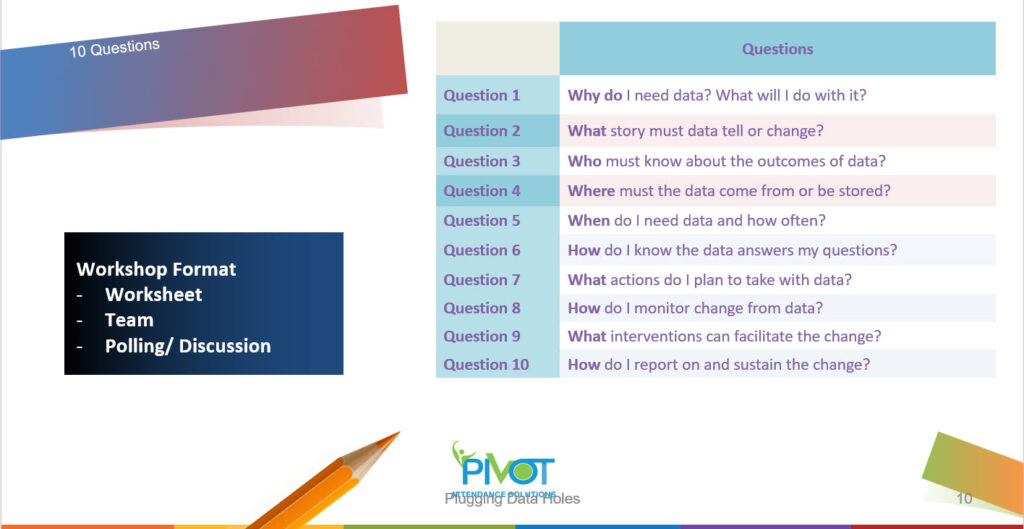
Like artificial intelligence and machine learning, the goal is to define, train, interpret, expose, and use existing data to tell a story. Supervised learning and unsupervised learning are required. This means the criteria established will dictate what must be collected (supervised) but as you attempt to solve the problem, trends, and patterns will emerge (unsupervised) which together will tell your story. Below are 10 questions to address varied components of the Attendance Improvement story you want to tell and a rationale context for each question.

10 Questions in Addressing Chronic Absenteeism
Workshop Questions

SO WHAT? NOW WHAT?

            What or who else is needed?

            Which documents inform my data?

            Which data brings dollars?

Data Question Context

Why do I need data? OR What will I do with data?

Determining the why and what of data are essential components of storytelling. They establish a baseline to assess change; set the performance goals which enable measurement of success; aids in organizing the information to be collected and combine to tell a convincing story through examination of trends and patterns.

What story must data tell?

Assessing good or bad depends on the story we tell. The same is true for determining urgency or a call to action. Data is often used as a call to action. As a result, it must be strategic and relevant, include examples for audience to visualize the why, be intentional with visuals to distill data, and be communicate with the action needed. In sum, data visualization with compelling narratives help to comprehend data and act.

Who must know about the outcomes of data?

If data must move the audience to action, knowing the audience is as essential as reporting the result to stakeholders. Therefore the outcomes must be communicated to those from whom the data was taken, those who must take action, those who will benefit from the action, as well as those who will monitor the change. Data is only as good as what it communicates and who it impacts.

Where must the data come from or be stored?

The location from which the data comes dictates its accuracy and effectiveness. Though we may retrieve data from student information systems, local state departments, from students and teachers, or even from community, the best place to get and store data is from a system where all variables impacted or will be impacted or may change can be added and assessed. Everything you would want to know must be collected in variable form. This will change overtime therefore the system must be able to accommodate the change.

When do I need data and how often?

Data needs change all the time. Despite data collection occurring in regular cycles such as every month, every semester, or as the states requires; it should be collected as often as available but best assessed semi-annually or annually. This is important because data must be collected around interventions or organized changes. The outcome is the ability to spot patterns and trends so when compared we are aware of where and when to intervene. In addition to create change, we are aware of where old variables must be complemented or swapped out for new ones.

How do I know the data answers my questions?

Data can be used to answer any question. The key is, can it answer your question. As such, playing a role in data collection or siphoning data from one place to use elsewhere requires early attention. Not everyone must be on board with what you collect but you must create a hypothesis with the questions you hope to answer. This is the only way you can be sure the data will answer the questions you have.  Identifying a hypothesis is a way of listing your problems and identifying the solutions you anticipate.

What actions do I plan to take with data?

After collecting and assessing data, action is necessary for it to have meaning. Revisiting the hypothesis can give direction but data users must take action by informing stakeholders, defining  benchmarks, assessing if goals are being met, and planning for change. Most importantly, data evaluators must identify the areas where they would want to introduce intervention or new variables for the best impact from data action. The actions can be targeted and specific to what change you want to see, within the timeframe you have identified within your system.

How do I monitor change from data?

Monitoring change, resulting from data, is simple when we run trend analysis at regular cycles. Monitoring at the start and end of each cycle ensures accuracy and timely variable change. A cycle is defined as a period for collecting information determined by the data collector. Its best to establish your own monitoring plan with all stakeholders who collects, stores, and assesses data. The goal is to use what you collect to set benchmarks, confirm hypotheses, and run trend analysis.

What interventions can facilitate change?

So, you want to use the data to facilitate change? Any intervention can facilitate change; albeit negative or positive but its best to have variable-specific interventions. Intervention success is not dependent on the number of persons impacted or the cost but, on the change anticipated by the hypothesis. In fact, intervention success is dependent on the problem to solve. If there is a match between the problem and the solution, interventions are often effective to facilitate the desired change.

How do I report on and sustain the change?

To complete the cycle, we must share the findings with all stakeholders especially those who identified the problem. Determining what to share is as important as where to share. Sharing on social media, in written or online reports, and annual general meetings are good places to start.

Summary

Data matters! However, without guidance the story it tells can change based on who and what is asked. To use data effectively, it’s important to be clear on what data you need, the story you want to tell, outcomes you want, actions you plan to take, possible interventions, monitoring and reporting plan, and how to sustain change. No matter what, Train your data, find ways to Interpret, and make sure it always solves the problem you need it to solve or identify change. This process is called TIP – Train, Interpret, Problem-solve. In the end, use the EARS process as often as you can to assess success—Elicit, Amplify, Reinforce, and Start over with each change you want to see.

Resources

Carolyn Gentle-Genitty
Carolyn Gentle-Genitty, PhD | Indiana University School of Social Work | cgentleg@iu.edu

About the Author

Dr. Carolyn Gentle-Genitty, founder, lead consultant, and Chief Education Officer for Pivot Attendance Solutions, has inspired many administrators, educators, students, and school social workers as a past chair of the school’s concentration Masters Curriculum, tenured professor, and Director of the Bachelors for Social Work Program. Having worked closely with Indiana Department of Education to assist school counselors in acquiring a school counselor license and coordinating curriculum mapping and application, she knows the intricacies of working with school-community partnerships. She has been a forerunner in responding to school absenteeism, truancy, and social bonding. She has over 30 years in youth development, 20 years in dropout and truancy and more specifically she brings over 12 years studying, researching, presenting, and writing about absenteeism locally, nationally, and internationally. In the US she is a leader in absenteeism and understanding school attendance problems and translating such into practice models for implementation. She is forging partnerships in colleges to establish the area as a formal field of study.

Attendance Team Collaboration

Teamwork is nothing new to the education field–it is a major part of the way we conduct the important business of educating children. Teachers are involved in grade-level or content area teams. Support and clerical staff work together on teams in the front office. Administrators operate on leadership teams at the district level. And there are teams on everything in between: from school climate committees to parent-teacher organizations to curriculum task forces to governing boards. But just because we’re all on teams doesn’t necessarily mean we automatically know how to interact, function, or execute our jobs or missions as one entity. Think about all of the teams you’ve participated on, either voluntarily or by assignment, and the qualities that made them successful…or not. 

Team Building for Success

Building a high-performing attendance team can be a little more complex than groups that are affiliated by subject matter or job roles, since they tend to be multi-disciplinary, cross-functional, and far-reaching. However, they do passionately share the same goal: Improving attendance for our most marginalized students. Here are a few tips for creating and organizing a well-designed attendance team: 

Think outside of the box when deciding whom to invite.

Obviously, you want to include the director of student services, a nurse or child welfare specialist, a site administrator from each grade span, a counselor, and attendance clerks, but also think about adding a student, parent/caregiver, student information system manager, and external community partners that also serve families. They can each add unique and valuable perspectives and offer creative solutions to consider as you craft your strategies and approaches to reduce truancies and chronic absenteeism.

Relationships don’t build themselves.

Though there are many pressing and urgent issues to attend to in your meetings, the work can be done much more effectively when team members know each other as human beings, learn to trust each other, and share their stories together. Spend some time exploring what draws each member to the work, why they care, what motivates them, and what they hope to accomplish by joining the team. These strong relationships will help people commit to coming to meetings and participating with their whole selves for the long term. 

Know and state your purpose.

In early meetings, the team should establish norms, define appropriate goals and expectations, and establish a flexible decision-making process. It’s also important to communicate with each other openly, freely, and democratically. Consider leveling the playing field and breaking down barriers by using first names rather than titles or ranking. When issues are handled professionally and promptly and each member knows how their own part contributes to the whole, teams can cover more ground and make a greater impact on student attendance. 

As the African proverb says “If you want to go fast, go alone, if you want to go far, go together”. And since we have many miles to go before we sleep in the work of improving student attendance, it’s much more sustainable to do so as a team that works!

About the Presenter

Kim Wallace, Professional Educational Consultant & Author at Process Makes Perfect

Born and raised in an educator household, Dr. Kim Wallace started her own career in public education 30 years ago as a high school English and history teacher before becoming a site principal and district office administrator. Her most recent K-12 role was as superintendent of one of the 20 largest school districts in California. 

Kim joined the UC Berkeley School of Education Leadership Programs division as the Associate Director of the 21st Century California School Leadership Academy (21CSLA) State Center in 2020. She also runs her own consulting company Process Makes Perfect, specializing in real world solutions for practitioners in the field. Kim consults, writes, and presents internationally on systems change and emerging trends in educational leadership. An award-winning, innovative educator, Kim leverages her abilities in educational administration, program management, and relationship development to optimize institutional effectiveness and deliver remarkable results.

Dr. Wallace’s book Leading the Launch: A Ten-Stage Process for Successful School District Initiatives was published by Solution Tree Press in 2021, followed by Leading Through an Equity Lens in 2023. Her upcoming book, Gamechanging Leadership in Action: An Educator’s Companion is in production with Routledge/Taylor & Francis (Fall 2025). Kim attended the University of California Santa Barbara for her undergraduate degree in history. She then earned her Master’s in Education (M.Ed.) at the University of California Los Angeles and culminated her educational goals with a Doctorate in Education (Ed.D.) from the University of California Davis.

Proactive Strategies

Take a break from the hamster wheel. Plan your year! Assess why you do what you do and the results you are getting. Intentionally defining and planning to prevent absenteeism requires methods and tools, partnerships and data interpretation, and social connections. The result of these factors lends itself to the content necessary to identify needed messaging strategies and influence change for measurable positive attendance improvement outcomes. 

from EDMS Expert Series: 09/22/2022

Discussions in Preventing Absenteeism

Discussions of the importance of schooling and student attendance dates far back to 1635, in Boston. It was similar to the Free Grammar School of England. The Boston Latin School for boys was introduced to prepare students for college, although some like Benjamin Franklin dropped out (See here). Since then and now, there have been questions about how to prevent children from leaving or missing school. The study of school absenteeism, now being advanced worldwide by the International Network for School Attendance (INSA) and supported by various national organizations, is documenting scholarly research on forms, types, categories, and methods to examine school attendance and absenteeism. In fact, their earliest citation dates back to the 1980s with the first accessible article by Berney, Kolvin, Bhate, Garside, Jeans, Kay, & Scarth (1981) on school phobia in the British Journal of Psychiatry.

The point is, we have been studying, examining, and trying to figure out how to prevent student absenteeism for centuries. With mountains of data, processes, ways, and means to approach at least one answer we have come to know that methods, tools, and messaging are the hallmark of any effective solution. Such solutions should be consistent and cyclical.

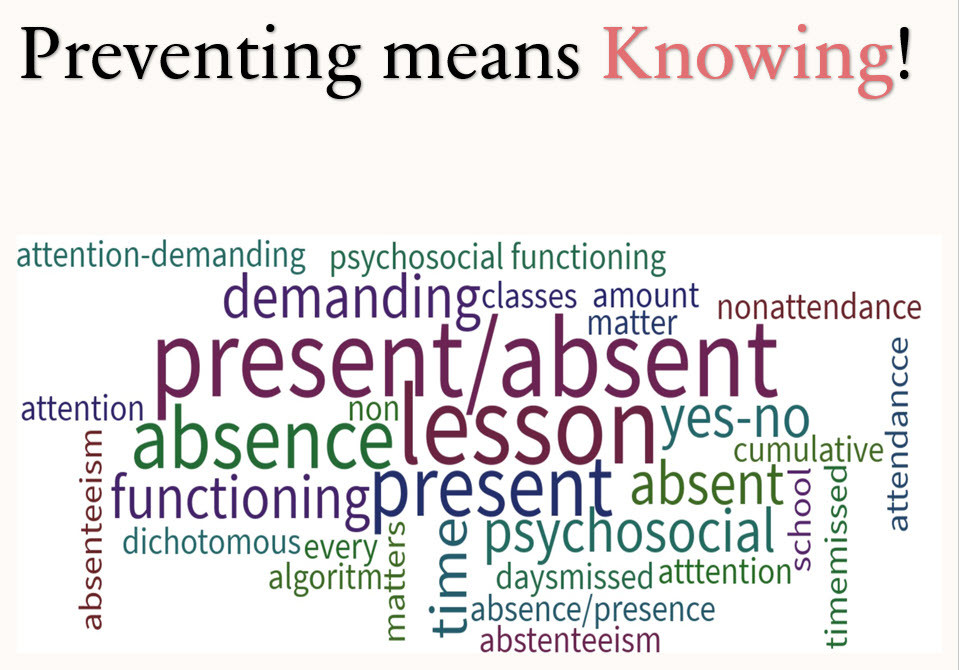
Accomplishing consistency in methods, tools, and messaging speculates, to prevent we must know.

Preventing means knowing

Preventing is knowing! 

We must know what we are preventing and what symptoms have been shown to indicate an interest in being absent or signals of willingness to be present. These can include psychosocial matters, home, academic, curriculum demands, functioning, time-based discipline, lesson absence, classroom climate, and more. Therefore, we should be asking “what matters?”

Absenteeism = All Experience

Knowing absenteeism equals the total sum of a students’ in-school and out-of-school experiences, then what matters is what happens in and out of school.

In and out of school means what matters for students regarding:

  • Attending – Presence and absence from school and curriculum
  • Participating – Engagement in or not in positive and negative school experiences
  • Bonding – Feeling attached, committed, involved, and believing in the value of school
  • Tracking – Who, what, and why track attendance and insights gleaned to improve
  • Sharing – Using information for benefit of students and shared for improvement for all
In and Out of School Time

Knowing what matters in and out school offers us the opportunity to learn also that control matters. There are three forms of Direct control (rewards and punishment), Indirect control (pro-social relationships), and Internal control (personal compass). Finding and implementing tools and interventions to respond to these three (3) forms of control are sure ways to prevent school absenteeism.

Getting to outcomes however, requires us to have methods, tools and messaging.

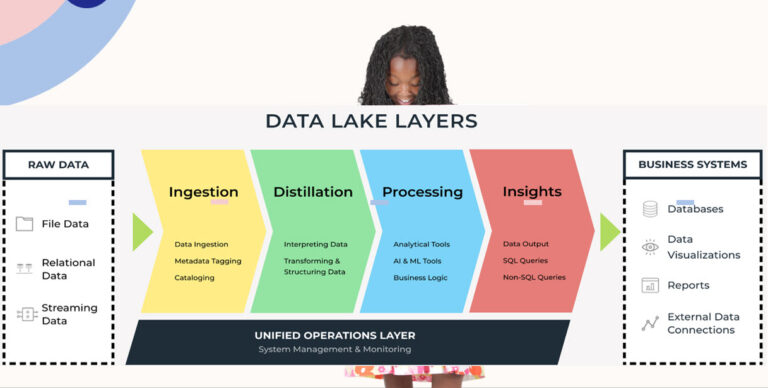
Methods should assist in measurement of data and use of data lakes to report on all controls. It should …

  1. Identify indicators: Ways to compare last year to this coming year; RaaWee data tools can help
  2. Find Benchmarks: External partners to whom we can compare progress and set targets

Tools should ensure indirect control and should…

  1. Give a temperature check on impact for students, staff, climate, and families. For all.
  2. Whether it is MTSS, RTI, PBIS, RaaWee, your own solution or emerging solutions, measurable impact is the goal.

Messaging should meet students’ internal control needs and share what matters…

  1. Convey the importance of schooling and celebrating presence.
  2. Inform of current state and growth yet to come
  3. Value partnership and relationships and role of all
Data Lake Layers

When preventing is knowing, control matters. What matters is tracking methods, tools, and messaging in data lakes where consistent reports of impact from all controls can be gleaned and shared. The lives of our students and their families are in our hands. They must know why schooling, in various formats, matters and that we care.

###

Dr. Carolyn Gentle-Gennity, PhD, Butler University
Carolyn Gentle-Genitty, PhD Butler University

About the Author

Dr. Carolyn Gentle-Genitty, founder, lead consultant, and Chief Education Officer for Pivot Attendance Solutions, has inspired many administrators, educators, students, and school social workers as a past chair of the school’s concentration Masters Curriculum, tenured professor, and Director of the Bachelors for Social Work Program. Having worked closely with the Indiana Department of Education to assist school counselors in acquiring a school counselor license and coordinating curriculum mapping and application, she knows the intricacies of working with school-community partnerships. She has been a forerunner in responding to school absenteeism, truancy, and social bonding. She has over 30 years in youth development, 20 years in dropout and truancy, and more specifically, she brings over 12 years studying, researching, presenting, and writing about absenteeism locally, nationally, and internationally. In the US she is a leader in absenteeism and understanding school attendance problems and translating such into practice models for implementation. She is forging partnerships in colleges to establish the area as a formal field of study.
The Challenge

Yesterday and today are different. For many, the difference is like night and day. This is the case for those who experience mental health challenges versus those who do not. It is not the same as having a bad day. It’s hard to describe.

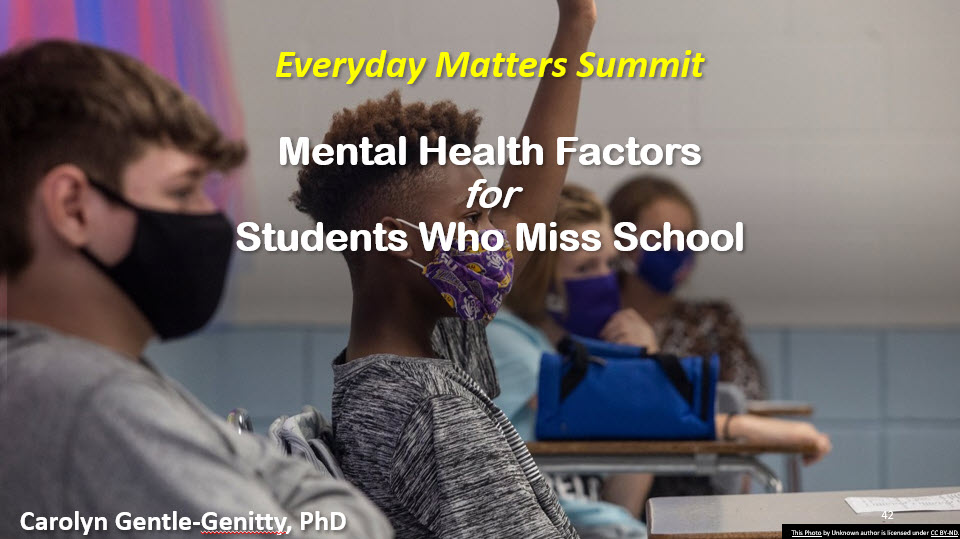
Mental Health Factors
Watch Full Event Video

Student Attendance and Mental Health

The gap between yesterday and today can feel strikingly different for individuals grappling with mental health challenges compared to those who do not. This distinction extends beyond merely experiencing an occasional bad day; it encompasses a deeper internal struggle that significantly influences how we feel, think, and behave. For children, these mental health issues frequently manifest as changes in their daily routines and academic performance, leading to increased absenteeism. Alarmingly, statistics reveal that 50% of all mental disorders begin to develop before a child reaches the age of 15, making early intervention crucial for effective student attendance improvement.

Chronic Absenteeism and School Resources

Schools serve as vital institutions where students learn essential skills, ranging from reading and writing to problem-solving and social interaction. They also provide crucial support services for children while their parents work. However, many students lost access to these essential resources during periods of disruption, which included not just education but also food services, health care from school nurses, opportunities for social development, and activities that foster teamwork and discipline. Additionally, students missed out on learning important life skills related to self-care, hygiene, time management, and the cultivation of their identities. The transition to online learning allowed for the continuation of academic instruction, yet it largely failed to address the remaining 80% of the holistic support that schools traditionally offer. This lack of comprehensive care compounded issues of chronic absenteeism, leaving both students and parents feeling constrained and overwhelmed. As a result, there was a notable increase in mental health issues, particularly among those students who continued to miss school.

Attendance Improvement Strategies

To effectively support students who are grappling with mental health challenges and chronic absenteeism, schools can adopt a variety of targeted strategies designed to address these pressing issues. Implementing initiatives focused on attendance improvement can help cultivate a supportive environment that encourages regular attendance and promotes overall well-being among students. By identifying and addressing the root causes of absenteeism, schools can create tailored interventions that not only enhance student attendance but also contribute positively to their mental health and academic success.

UNICEF

Context

The numbers are still rolling in but UNICEF reports that over 332 million children were linked to the COVID-19 lockdown policies. Many students were absent or affected ‌ mentally or physically, from the shutdown, closure, or online delivery of schools during the pandemic.

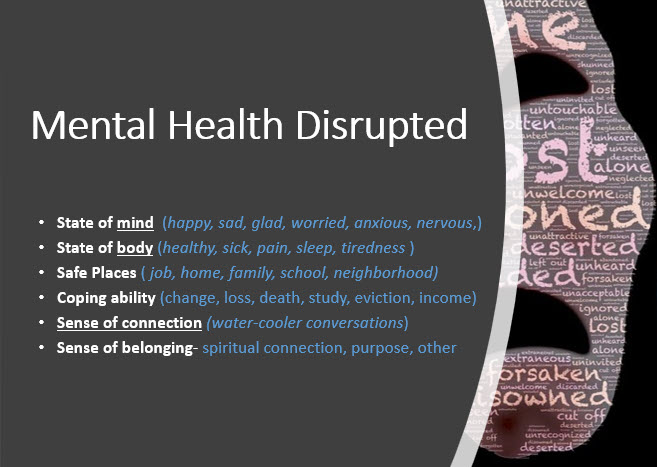
The impact was of catastrophic proportions with an underlying problem–mental health. For students and teachers, the states of mind, body, place, ability, and connection were disrupted during the pandemic.

Levels of context and feelings around many generalized everyday terms like:

Mental Health Disrupted

Student Attendance and Holistic Support

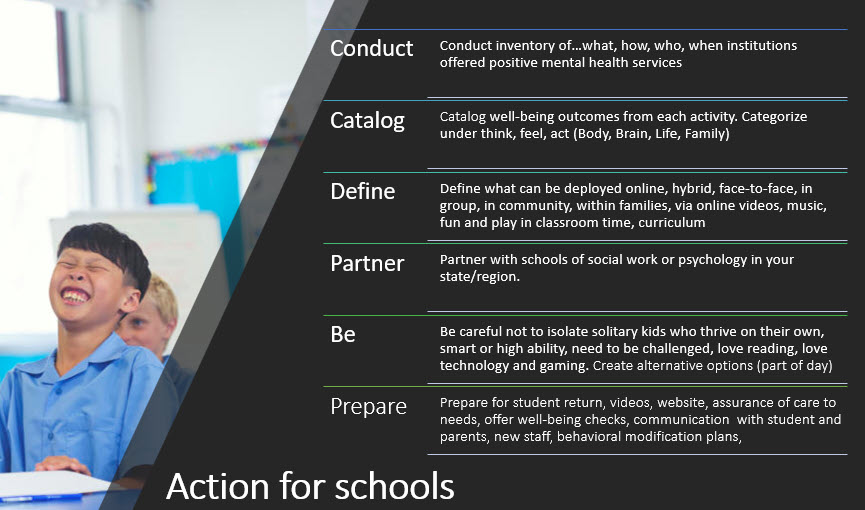
To effectively respond to all states of what was disrupted, schools must expand their focus beyond just academics. It is essential to reintegrate play, fun, music, poetry, and role modeling into the school experience, utilizing community partners and actively engaging parents. Convening task forces can provide the necessary support, but the American Council on Education suggests that attention should also be directed toward enhancing overall campus culture and climate. This approach aims to promote, improve, and foster positive mental health and well-being while increasing awareness and access to services. Changes to policies and protocols for supporting mental health are crucial in this effort. The overarching goal remains the same: to help students express their thoughts, normalize questions and concerns, build relationships, and maintain connections. UNICEF Director Forte emphasizes the urgency, stating, “Many children are left feeling afraid, lonely, anxious, and concerned for their future. We must emerge from this pandemic with a better approach to child and adolescent mental health, and that starts by giving the issue the attention it deserves.”

Attendance Improvement through Understanding Mental Health

Mental health encompasses a range of mixed disorders, conditions, and symptoms, often associated with impaired socioemotional development or linked historically or diagnostically. Empirical outcomes for students experiencing absenteeism include behavioral changes and school attendance problems, which can manifest as school avoidance, withdrawal, refusal, truancy, or even dropout. These behaviors can arise from various stimuli, such as avoidance, escape, attention-seeking, or the pursuit of rewards outside of the school environment. The factors surrounding mental illness can be both risk and protective, but they are often cumulative and represent a bundled risk.

The Impact of the Pandemic on Absenteeism

During the pandemic, the effects of bundled risk became glaringly evident in both time and space. In terms of time, we witnessed changes characterized by scarcity, poor time management, limited self-care, and a breakdown in collaborative care—often referred to as outsourcing. Outsourcing care is a hallmark of modern society, where we rely on partners to address various needs: schools educate, restaurants provide meals, healthcare professionals offer medical services, sports and events furnish entertainment, and churches and daycares offer community and care for our loved ones. However, the pandemic and subsequent lockdowns drastically altered this outsourcing dynamic. These changes blurred boundaries, leading to increased crises and emotional outbursts, further complicating the landscape of student attendance and mental health.

Actions for Schools

Most common intervention is Cognitive behavior therapy to respond to anxiety, depression, self-efficacy, emotional distress, social-emotional, academic development. However, Psychosocial Intervention, Narrative Therapy, Motivational Interviewing, Parental Counseling, and Family Therapy are also options.  Yet providing resources and education on spotting and responding to somatic complaints (stomachache, feeling unwell or resistive behavior (temper tantrums, violent behavior) are also universal resources that can be offered.

Action for schools

Citation

Gentle-Genitty, C. (January 27, 2022). Mental health factors for students who miss school. Every Day Matters Summit, TX. DOI: https://doi.org/10.7912/pgm6-qq04
 
Dr. Carolyn Gentle-Gennity, PhD, Butler University
Carolyn Gentle-Genitty, PhD | Indiana University School of Social Work | cgentleg@iu.edu

About the Author

Dr. Carolyn Gentle-Genitty, founder, lead consultant, and Chief Education Officer for Pivot Attendance Solutions, has inspired many administrators, educators, students, and school social workers as a past chair of the school’s concentration Masters Curriculum, tenured professor, and Director of the Bachelors for Social Work Program. Having worked closely with Indiana Department of Education to assist school counselors in acquiring a school counselor license and coordinating curriculum mapping and application, she knows the intricacies of working with school-community partnerships. She has been a forerunner in responding to school absenteeism, truancy, and social bonding. She has over 30 years in youth development, 20 years in dropout and truancy and more specifically she brings over 12 years studying, researching, presenting, and writing about absenteeism locally, nationally, and internationally. In the US she is a leader in absenteeism and understanding school attendance problems and translating such into practice models for implementation. She is forging partnerships in colleges to establish the area as a formal field of study.
Whole Child Approach to Attendance Improvement

Taking a whole child approach to improving attendance is the wave of the future—and the only way to truly change is from the inside out. RaaWee’s comprehensive truancy prevention system meets students (and their families) where they are and helps educators utilize field-tested tools to get young people back on the pathway to academic success in a variety of learning models.

Commitment to Student and Family Welfare

So let’s re-up our commitment to student and family welfare by avoiding three key pitfalls of a non-integrated attendance intervention plan. While each of the pitfalls has its own trappings, all three can be avoided by adopting a high-quality, substantial, and centralized attendance improvement system. Stand-alone versions simply don’t make the cut in a world as mutable as ours.

I want the truth and i want it now
Download and Share the Complete Guide

Imperatives for Selecting an Integrated Attendance System

When vetting your options, consider these imperatives of selecting a truly integrated platform to yield the most impactful outcomes:

  1. Clear and varied communication tools
  2. Valid, diverse, and dynamic data
  3. The program’s ability to quickly adapt to emerging societal conditions

RaaWee hits all of these marks and more. Look before you leap into this school year to protect your most valuable resource of all: our students. They deserve an attendance system that makes sense in order for them to make a difference.

Tackling Chronic Absenteeism and Truancy

By addressing chronic absenteeism and truancy through an integrated approach, we can ensure that every student has the opportunity to thrive.

About the Presenter

Kim Wallace, Professional Educational Consultant & Author at Process Makes Perfect

Born and raised in an educator household, Dr. Kim Wallace started her own career in public education 30 years ago as a high school English and history teacher before becoming a site principal and district office administrator. Her most recent K-12 role was as superintendent of one of the 20 largest school districts in California. 

Kim joined the UC Berkeley School of Education Leadership Programs division as the Associate Director of the 21st Century California School Leadership Academy (21CSLA) State Center in 2020. She also runs her own consulting company Process Makes Perfect, specializing in real world solutions for practitioners in the field. Kim consults, writes, and presents internationally on systems change and emerging trends in educational leadership. An award-winning, innovative educator, Kim leverages her abilities in educational administration, program management, and relationship development to optimize institutional effectiveness and deliver remarkable results.

Dr. Wallace’s book Leading the Launch: A Ten-Stage Process for Successful School District Initiatives was published by Solution Tree Press in 2021, followed by Leading Through an Equity Lens in 2023. Her upcoming book, Gamechanging Leadership in Action: An Educator’s Companion is in production with Routledge/Taylor & Francis (Fall 2025). Kim attended the University of California Santa Barbara for her undergraduate degree in history. She then earned her Master’s in Education (M.Ed.) at the University of California Los Angeles and culminated her educational goals with a Doctorate in Education (Ed.D.) from the University of California Davis.

Importance and Immediacy of Truancy Prevention

Dr. Kim Wallace, EdD, discusses the immediate need for implementing and sustaining a quality attendance improvement program for your school or district.

Program Implementation

There exists a prevalent misconception among educators that once the school year has commenced, there is insufficient time to adopt or implement a new program. In reality, while staff may need to dedicate additional time and effort at the outset to effectively integrate a new platform into their operations, the time savings realized on the back end can be truly remarkable.

The Time is Prime for Truancy Prevention White Paper
Download and Share Complete White Paper

Research conducted by Hall and Khan (2004) emphasizes that the crucial decision is not simply whether to adopt a new system, but rather when to make that choice. The dilemma revolves around the timing of adoption—whether to move forward now or postpone the decision, which can lead to missed opportunities for improvement. Ultimately, it boils down to the urgency of helping students today versus delaying assistance for a later time. The costs associated with waiting can far outweigh the perceived benefits of starting a new attendance system on the first day of school.

Chronic Absenteeism Efforts

If we genuinely uphold the philosophy that “every day matters,” we must act on this principle by promptly updating and enhancing to an automated attendance monitoring system. Delaying this essential upgrade is counterproductive. The reality is that you cannot assess what you are unaware of, and acquiring knowledge is the most potent tool we possess in the field of education.

The holistic approach to the whole child by the RaaWee Attendance+ system offers a comprehensive understanding of the various factors influencing a student’s attendance history, their current attendance status, and the potential trajectory for their future. Taking action now can make a significant difference, and it’s essential to recognize that it’s never too late to begin improving attendance. The key lies in the immediacy of our actions.

Citation

Hall, Bronwyn & Khan, Beethika. (2004). Adoption of New Technology. Working Paper 9730.

National Bureau of Economic Research. Accessed on 9/12/21 from https://www.researchgate.net/publication/23742215_Adoption_of_New_Technology.


About the Presenter

Kim Wallace, Professional Educational Consultant & Author at Process Makes Perfect

Born and raised in an educator household, Dr. Kim Wallace started her own career in public education 30 years ago as a high school English and history teacher before becoming a site principal and district office administrator. Her most recent K-12 role was as superintendent of one of the 20 largest school districts in California. 

Kim joined the UC Berkeley School of Education Leadership Programs division as the Associate Director of the 21st Century California School Leadership Academy (21CSLA) State Center in 2020. She also runs her own consulting company Process Makes Perfect, specializing in real world solutions for practitioners in the field. Kim consults, writes, and presents internationally on systems change and emerging trends in educational leadership. An award-winning, innovative educator, Kim leverages her abilities in educational administration, program management, and relationship development to optimize institutional effectiveness and deliver remarkable results.

Dr. Wallace’s book Leading the Launch: A Ten-Stage Process for Successful School District Initiatives was published by Solution Tree Press in 2021, followed by Leading Through an Equity Lens in 2023. Her upcoming book, Gamechanging Leadership in Action: An Educator’s Companion is in production with Routledge/Taylor & Francis (Fall 2025). Kim attended the University of California Santa Barbara for her undergraduate degree in history. She then earned her Master’s in Education (M.Ed.) at the University of California Los Angeles and culminated her educational goals with a Doctorate in Education (Ed.D.) from the University of California Davis.

Strengthening Student Attendance

Promoting strong student attendance has always been an essential focus for public education, but it has never been more critical than today. The challenges posed by the pandemic have significantly disrupted traditional educational experiences, leading to varied forms of learning that left many students disengaged. As we work to welcome students back into the classroom, we must be creative, forward-thinking, and proactive in our approaches. It is vital to invite, encourage, and reassure our students that returning to school is in their best interest, both academically and socially.

Doubling down on school attendance white paper
Download and Share Complete White Paper

Proactive & Reactive Intervention

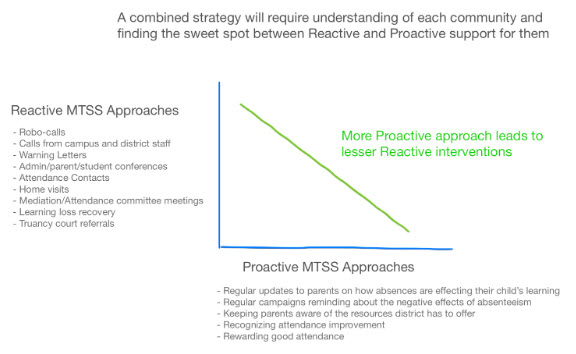
To effectively address attendance issues, schools should implement a combination of proactive and reactive Multi-Tiered System of Supports (MTSS) strategies. Proactive interventions involve anticipating potential barriers to attendance and addressing them before they escalate. This might include regular check-ins with students, monitoring attendance patterns, and identifying students who may be at risk of falling behind. By being proactive, schools can intervene early, providing support and resources to help students navigate challenges before they lead to chronic absenteeism.

Conversely, reactive interventions are equally important for addressing attendance issues that have already arisen. This may involve reaching out to families to understand the reasons behind absences and developing tailored plans to support students’ return to school. Engaging with students who have missed significant time allows educators to adopt a more personalized approach, ensuring that each student’s unique circumstances are recognized and properly addressed.

MTSS Approaches

There is no right or wrong when it comes to proactive versus reactive MTSS-related implementations. The only mistake educators can make is not doing either. That’s why RaaWee K12 Solutions is committed to helping districts of all sizes “double down” by taking a tenacious and resolute approach to empowering staff, students, and families through their MTSS programming. By providing twice the amount of assistance, we can build stronger relationships and create a supportive educational environment. The invaluable rewards of this commitment will extend far beyond improved attendance; they will shape the future success of our students, paving the way for their academic achievements and personal growth.

About the Presenter

Kim Wallace, Professional Educational Consultant & Author at Process Makes Perfect

Born and raised in an educator household, Dr. Kim Wallace started her own career in public education 30 years ago as a high school English and history teacher before becoming a site principal and district office administrator. Her most recent K-12 role was as superintendent of one of the 20 largest school districts in California. 

Kim joined the UC Berkeley School of Education Leadership Programs division as the Associate Director of the 21st Century California School Leadership Academy (21CSLA) State Center in 2020. She also runs her own consulting company Process Makes Perfect, specializing in real world solutions for practitioners in the field. Kim consults, writes, and presents internationally on systems change and emerging trends in educational leadership. An award-winning, innovative educator, Kim leverages her abilities in educational administration, program management, and relationship development to optimize institutional effectiveness and deliver remarkable results.

Dr. Wallace’s book Leading the Launch: A Ten-Stage Process for Successful School District Initiatives was published by Solution Tree Press in 2021, followed by Leading Through an Equity Lens in 2023. Her upcoming book, Gamechanging Leadership in Action: An Educator’s Companion is in production with Routledge/Taylor & Francis (Fall 2025). Kim attended the University of California Santa Barbara for her undergraduate degree in history. She then earned her Master’s in Education (M.Ed.) at the University of California Los Angeles and culminated her educational goals with a Doctorate in Education (Ed.D.) from the University of California Davis.

Student Attendance Improvement Focus after Pandemic

As the effects of more than a year of pandemic living begin to wane, schools and districts are rapidly pivoting to prepare for the return of students and staff to full-day instruction, athletics, and extracurricular activities. While there is an undeniable sense of excitement about reopening schools, it is crucial to recognize that many students and families will require additional support to re-establish their daily routines, particularly concerning in-person attendance.

This research report offers a forward-looking perspective on the challenges educators across the nation anticipate as schools resume operations. It also presents innovative ideas and strategies aimed at helping students readjust to positive attendance patterns and effective work habits.

 
Bringing them back
Download and Share
RaaWee K12 Solutions is collaborating with education professionals to develop real-time responses that will enhance student attendance, provide necessary interventions, and combat rising rates of truancy and chronic absenteeism.

Examining the Reality & Defining Re-Engagement Strategies

The following report provides a comprehensive examination of the issues at hand, along with actionable solutions to build on the successes achieved during this year of growth and adaptation. You may be familiar with the traditional belief that it takes approximately three weeks, or about 21 days, for individuals to form new habits or break old ones. However, more recent research from University College London (2010) indicates that the average time required to change a behavior is actually 66 days, with individual variations ranging from 18 to an astonishing 254 days.

Given that many American families have engaged in virtual or hybrid learning models for over a year, the re-entry process to in-person, on-time, full-day instruction presents significant challenges. Both adults and young people have largely abandoned their previous habits of waking up to an alarm clock, managing morning routines, grabbing breakfast on the go, navigating rush hour traffic, and arriving at school before the bell rings. What once happened almost automatically now requires intentional effort to re-establish.

As the nation gradually reopens and we collectively resume some pre-pandemic activities, it is essential to acknowledge that not everything will revert to its former state. Therefore, we must anticipate and plan for attendance scenarios that may have existed in the past but have evolved in distinct ways. RaaWee K12 Solutions is at the forefront of this transition, ready to assist schools, districts, families, and students in reintegrating smoothly into their educational settings.

About the Presenter

Kim Wallace, Professional Educational Consultant & Author at Process Makes Perfect

Born and raised in an educator household, Dr. Kim Wallace started her own career in public education 30 years ago as a high school English and history teacher before becoming a site principal and district office administrator. Her most recent K-12 role was as superintendent of one of the 20 largest school districts in California. 

Kim joined the UC Berkeley School of Education Leadership Programs division as the Associate Director of the 21st Century California School Leadership Academy (21CSLA) State Center in 2020. She also runs her own consulting company Process Makes Perfect, specializing in real world solutions for practitioners in the field. Kim consults, writes, and presents internationally on systems change and emerging trends in educational leadership. An award-winning, innovative educator, Kim leverages her abilities in educational administration, program management, and relationship development to optimize institutional effectiveness and deliver remarkable results.

Dr. Wallace’s book Leading the Launch: A Ten-Stage Process for Successful School District Initiatives was published by Solution Tree Press in 2021, followed by Leading Through an Equity Lens in 2023. Her upcoming book, Gamechanging Leadership in Action: An Educator’s Companion is in production with Routledge/Taylor & Francis (Fall 2025). Kim attended the University of California Santa Barbara for her undergraduate degree in history. She then earned her Master’s in Education (M.Ed.) at the University of California Los Angeles and culminated her educational goals with a Doctorate in Education (Ed.D.) from the University of California Davis.

MTSS Re-Engagement Tools

As the first academic quarter of this unique school year approaches its conclusion, educators and their partners have gained invaluable insights. RaaWee K12 Solutions, having swiftly adapted to this dynamic learning environment, stands at the forefront of designing real-time responses to the needs of educators and families. Our innovation team proactively gathered feedback from practitioners about their experiences with distance, hybrid, and in-person learning across schools and districts statewide. It became increasingly clear: support was essential for promoting attendance improvement and addressing chronic absenteeism.

Multi-tiered Support Solutions from RaaWee K12
Download CA SB98 Crosswalk 

It was abundantly clear: people needed help!

Site administrators, registrars, attendance clerks, school secretaries, district office student support services, teachers, and parents/guardians alike all desired an advanced and comprehensive system to monitor student attendance and well-being. As a result, RaaWee got right to work on updating our tools, online platform, and communications to reflect the evolving nature of tracking and supporting strong student attendance throughout the COVID-19 pandemic. Since August alone, we streamlined and calibrated our attendance reporting definitions, created a set of 20 motivational flyers on relevant attendance topics, and devised a crosswalk between our services and California Senate Bill 98 to help districts report accurately to the State Department of Education

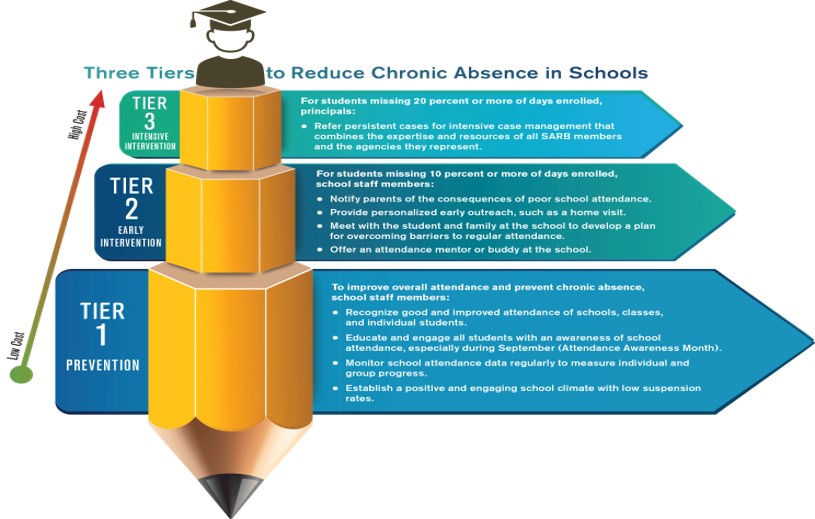
SB98 outlines three tiers of support for positive attendance—each in which RaaWee can assist our partner districts:

3 tiers to reduce chronic absence in schools

– Tier 1: Creating an open, welcoming environment that engages students and parents

– Tier 2: Early interventions for students exhibiting attendance problems Tier

– Tier 3: Interventions for chronic truants involved in the School Attendance Review Board (SARB) process

Addressing Chronic Absenteeism

In the educational landscape, everyone has a vital role to play. Our mission is to simplify life for caregivers by easing documentation tasks and follow-up responsibilities, allowing educators and parents to focus on their core responsibilities: teaching and nurturing their children. RaaWee’s comprehensive digital platform and tool set is singularly focused on attendance improvement and encompasses prevention, intervention, and postvention strategies and tools that address a wide range of indicators and root causes contributing to chronic absenteeism.

Realistically, even the most motivated students may struggle during this transition to distance learning, and those who faced challenges in traditional settings may require even greater support. We are committed to ensuring that all children remain actively engaged in their learning, regardless of their circumstances. RaaWee is a company that listens, cares, and strives to eliminate barriers that prevent young people from reaching their full potential. We understand that many of life’s successes begin with simply showing up, and that is our passion and mission now and into the future. By focusing on attendance improvement and re-engagement, we believe our society will benefit tremendously.

Kim Wallace

About the Author

Dr. Kim Wallace is a professional educational consultant with Process Makes Perfect. She started her career in public education 27 years ago as a high school instructor before going into site and district administration. She most recently served as the superintendent of a large San Francisco Bay Area district. Kim consults, writes, and presents on the topics of leadership, curriculum and instruction, policy and protocol, and future trends in education. 

An Asynchronous Challenge:

The beginning of school this year has been a challenge, to say the least. We had approximately 14,690 students in WFISD last year, but only have about 13,500 this year. We are still trying to find a significant number of our previous students.  Our school district offered two choices at the beginning of the year, Face to Face {synchronous) instruction or Remote (asynchronous) instruction. We have several thousand students who chose the remote option and it is a huge challenge to keep them engaged, accounted for, and logged on properly in order to get accurate attendance.

Using RaaWee K12 Solutions in the Spring when we first shut down was a huge help for us this school year. I worked through the first shutdown and did close to 500 home visits and made approximately 2,500 phone calls to locate students. I put all of that information into RaaWee as I did it. At the beginning of this school year, those records were essential in locating students and families that had been displaced during the first shutdown. I would not have found half of the students I was looking for if I did not have that information.

WFISD

About WFISD

Wichita Falls is a city of approximately 100,000 people. In WFISD we have 3 high schools, 3 junior highs, 19 elementary schools, a Career Education Center, and an alternative school. In the 2019-2020 school year, we had approximately 14,600 students enrolled in WFISD. This year we are down about 1,000 students.

Blending Synchronous & Asynchronous Attendance Models

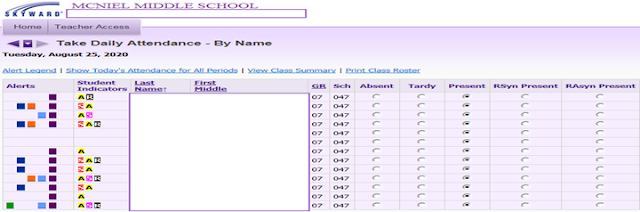
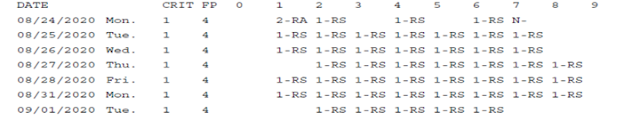
For the 20-21 school year, we have an asynchronous model for elementary grades PK-5, a synchronous option for our secondary schools, 6-12, and an asynchronous option for our severe and profound students, 6-12. To take attendance for our remote students, we created 2 new present buttons that show on the teacher’s rosters. One is an RSyn present button for secondary students who chose the remote synchronous option and entered the attendance code of 1-RS. The second one is an RSAYn present button for secondary students who are in our severe and profound program and puts in a 2-RA attendance code.

screenshot of middle school attendance

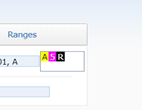
In order to know who was remote and who was face to face, we created an activity to put our remote students in so that when anyone looked at the student’s file in Skyward they would know they were remote by the R. As seen to the right.

attendance

Once this code is entered, it puts an attendance code in the student’s record and looks like the picture below.

Attendance

These codes have created issues for us as many of the teachers have not been consistent in using them properly. The 1-RS is a code for a remote synchronous secondary student. But as you can see by the picture, we have teachers who use the wrong present button, and it puts in a 2-RA code, which is the code for our severe and profound students. However, overall, the system is working for the most part.

Asynchronous Attendance Method for Elementary

The Asynchronous method for our elementary schools has been quite a challenge as remote students are allowed to turn in work until 11:59 p.m. of the school day. That makes it so that the teachers have to go back into the Google Classroom the next morning and check and see if the student has done any work to give accurate attendance credit. This is where RaaWee has been a lifesaver for us as our attendance clerks put all communications with parents into RaaWee, and we can go back and double-check the teacher’s documentation to ensure accurate attendance accounting. For truancy purposes, we are not holding truancy court as our county has deemed it non-essential. So we are still using RaaWee to track and complete our truancy interventions to be in compliance with state law which has said truancy procedures are still required this year despite the pandemic.

Using Relationships & Incentives for Whole Team Buy-In

About the Author 

Verna Honeycutt, Attendance Coordinator, Wichita Falls ISD, TX

Verna Honeycutt was with WFISD for 22 years, dedicating the first 15 years of their career as a middle school History teacher at Kirby Jr. High. In January of 2015, she transitioned to the administration building and assumed the role of Attendance Coordinator for WFISD, a position she held for six years. During this time, Verna witnessed significant changes in truancy laws, which have directly influenced the operations of the Attendance office. In January of 2016, Ms. Honeycutt rewrote the truancy policy for Wichita County and assisted several neighboring districts in refining truancy programs within their school systems.