
Proactive Strategies
Take a break from the hamster wheel. Plan your year! Assess why you do what you do and the results you are getting. Intentionally defining and planning to prevent absenteeism requires methods and tools, partnerships and data interpretation, and social connections. The result of these factors lends itself to the content necessary to identify needed messaging strategies and influence change for measurable positive attendance improvement outcomes.
Proactive strategies for preventing chronic absenteeism and truancy in schools rely on consistent methods, effective tools, and targeted messaging. Preventing absenteeism requires knowing and understanding the total sum of a student's in-school and out-of-school experiences, including psychosocial matters, home life, academic demands, and classroom climate. The study of school absenteeism has a long history, with discussions on student attendance dating back to 1635 in Boston, and scholarly research documented by organizations like the International Network for School Attendance (INSA) since the 1980s.
Discussions in Preventing Absenteeism
Discussions of the importance of schooling and student attendance dates far back to 1635, in Boston. It was similar to the Free Grammar School of England. The Boston Latin School for boys was introduced to prepare students for college, although some like Benjamin Franklin dropped out (See here). Since then and now, there have been questions about how to prevent children from leaving or missing school. The study of school absenteeism, now being advanced worldwide by the International Network for School Attendance (INSA) and supported by various national organizations, is documenting scholarly research on forms, types, categories, and methods to examine school attendance and absenteeism. In fact, their earliest citation dates back to the 1980s with the first accessible article by Berney, Kolvin, Bhate, Garside, Jeans, Kay, & Scarth (1981) on school phobia in the British Journal of Psychiatry.
The point is, we have been studying, examining, and trying to figure out how to prevent student absenteeism for centuries. With mountains of data, processes, ways, and means to approach at least one answer we have come to know that methods, tools, and messaging are the hallmark of any effective solution. Such solutions should be consistent and cyclical.
Accomplishing consistency in methods, tools, and messaging speculates, to prevent we must know.
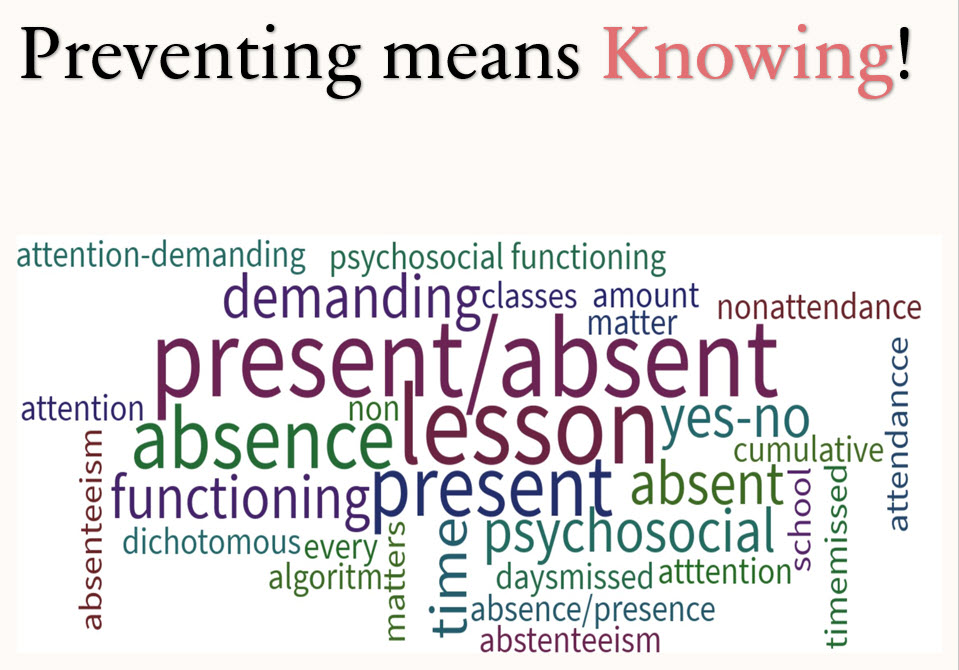
What must we know to prevent absenteeism effectively?
We must know what we are preventing and what symptoms have been shown to indicate an interest in being absent or signals of willingness to be present. These can include psychosocial matters, home, academic, curriculum demands, functioning, time-based discipline, lesson absence, classroom climate, and more. Therefore, we should be asking “what matters?”
How do all student experiences contribute to absenteeism?
Knowing absenteeism equals the total sum of a students’ in-school and out-of-school experiences, then what matters is what happens in and out of school.
In and out of school means what matters for students regarding:
- Attending – Presence and absence from school and curriculum
- Participating – Engagement in or not in positive and negative school experiences
- Bonding – Feeling attached, committed, involved, and believing in the value of school
- Tracking – Who, what, and why track attendance and insights gleaned to improve
- Sharing – Using information for benefit of students and shared for improvement for all
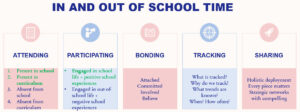
Knowing what matters in and out school offers us the opportunity to learn also that control matters. There are three forms of Direct control (rewards and punishment), Indirect control (pro-social relationships), and Internal control (personal compass). Finding and implementing tools and interventions to respond to these three (3) forms of control are sure ways to prevent school absenteeism.
Getting to outcomes however, requires us to have methods, tools and messaging.
How should methods assist in data measurement and reporting for absenteeism control?
- Identify indicators: Ways to compare last year to this coming year; RaaWee data tools can help
- Find Benchmarks: External partners to whom we can compare progress and set targets
How should tools ensure indirect control in absenteeism prevention?
- Give a temperature check on impact for students, staff, climate, and families. For all.
- Whether it is MTSS, RTI, PBIS, RaaWee, your own solution or emerging solutions, measurable impact is the goal.
How should messaging meet students' internal control needs and communicate what matters for attendance?
- Convey the importance of schooling and celebrating presence.
- Inform of current state and growth yet to come
- Value partnership and relationships and role of all
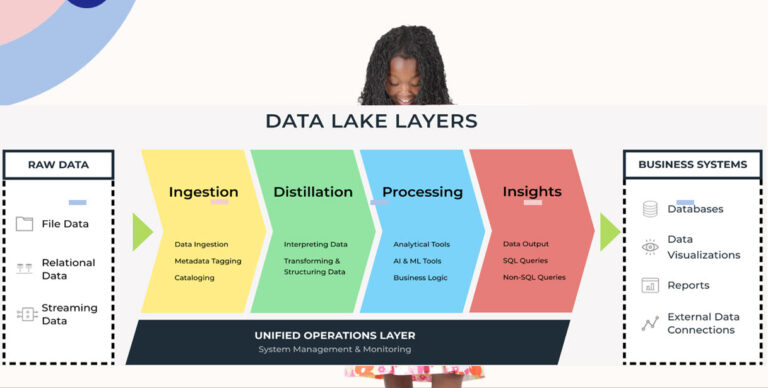
When preventing is knowing, control matters. What matters is tracking methods, tools, and messaging in data lakes where consistent reports of impact from all controls can be gleaned and shared. The lives of our students and their families are in our hands. They must know why schooling, in various formats, matters and that we care.

About the Author
Dr. Carolyn S. Gentle-Genitty is a scholar, systems thinker, and one of the country’s foremost authorities on school attendance science. As the developer of the Perceptions of School Social Bonding (PSSB) instrument, the only validated tool measuring all four of Hirschi’s social-bonding constructs, she has spent three decades reframing how schools understand why students miss school and what to do about it. Her central argument: attendance is not a compliance problem. It is the visible, measurable outcome of whether a student feels connected, valued, and safe enough to show up.
Dr. Gentle-Genitty is the CEO of Attendance USA, the first U.S. national organization dedicated to attendance science, policy, and practice.