
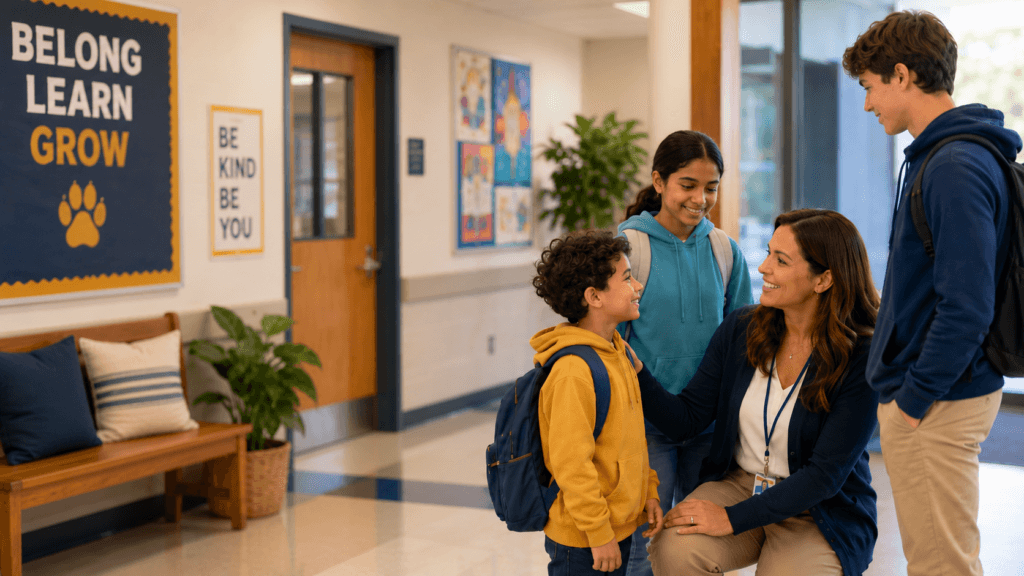
“Students attend schools where they feel they belong, not just where they are enrolled.”
The Power of Belonging: A Key to Reducing Chronic Absenteeism
As schools across the country wind down another academic year, one issue continues to demand urgent attention: chronic absenteeism. After 25 years serving as a teacher, principal, and student services director, I have learned that the root causes of absenteeism often fall into three categories: barriers, aversions, and disengagement. Disengagement, in its early stages, is when students become detached from school, feeling disconnected from peers, adults, activities, or the learning process itself.
At the center of all three challenges is one powerful solution: belonging.
When students feel connected, valued, and cared for, they are far more likely to come to school consistently. Studies consistently show that heightened student connectedness improves school attendance, academic achievement, graduation rates, and postsecondary success.
The Center for Mental Health in Schools & Student/Learning Supports at UCLA defines school connectedness as: “The belief by students that adults in the school care about their learning and about them as individuals.”
That belief changes EVERYTHING.
Belonging Is an Attendance Strategy
Missing school means missing valuable instructional time, but the impact extends far beyond academics. Chronic absenteeism affects a student’s confidence, relationships, mental health, and post-secondary outcomes. Students do not simply attend schools where they are enrolled. They attend schools where they feel they BELONG.
School connectedness is built through personalized communication, positive relationships, physically and psychologically safe environments, and authentic care. It happens when schools intentionally create welcoming spaces for students, families, and educators alike.
The RaaWee ATTENDANCE+™
brings together powerful features into a unified framework that strengthens communication, trust, relationships, and a sense of belonging.
From real-time data visibility and communication tools to structured interventions and recognition programs, the platform helps schools create intentional systems that ensure every student is seen, supported, and connected.
A culture of belonging includes:
● Safe and affirming learning environments for students
● Welcoming environments for families
● Supportive working environments for educators
Across all grade levels, students who feel more connected to school demonstrate higher attendance rates and stronger academic outcomes.
Belonging Begins Before the First Bell
For many students, belonging begins on the bus — the school bus.
Those moments may seem small, but they communicate a profound message: “You matter here, and we are glad you’re here.”
Trust is rarely built through grand gestures. It is built through small, consistent actions repeated every day.
The same principle applies across an entire district. Through RaaWee K12 ATTENDANCE+™, schools can reinforce those positive interactions with automated attendance notifications, personalized outreach, and two-way communication tools that connect schools and families in more than 200 languages. When communication is timely, supportive, and culturally responsive, families feel welcomed as partners in the educational process.
Intentional Actions That Build Belonging
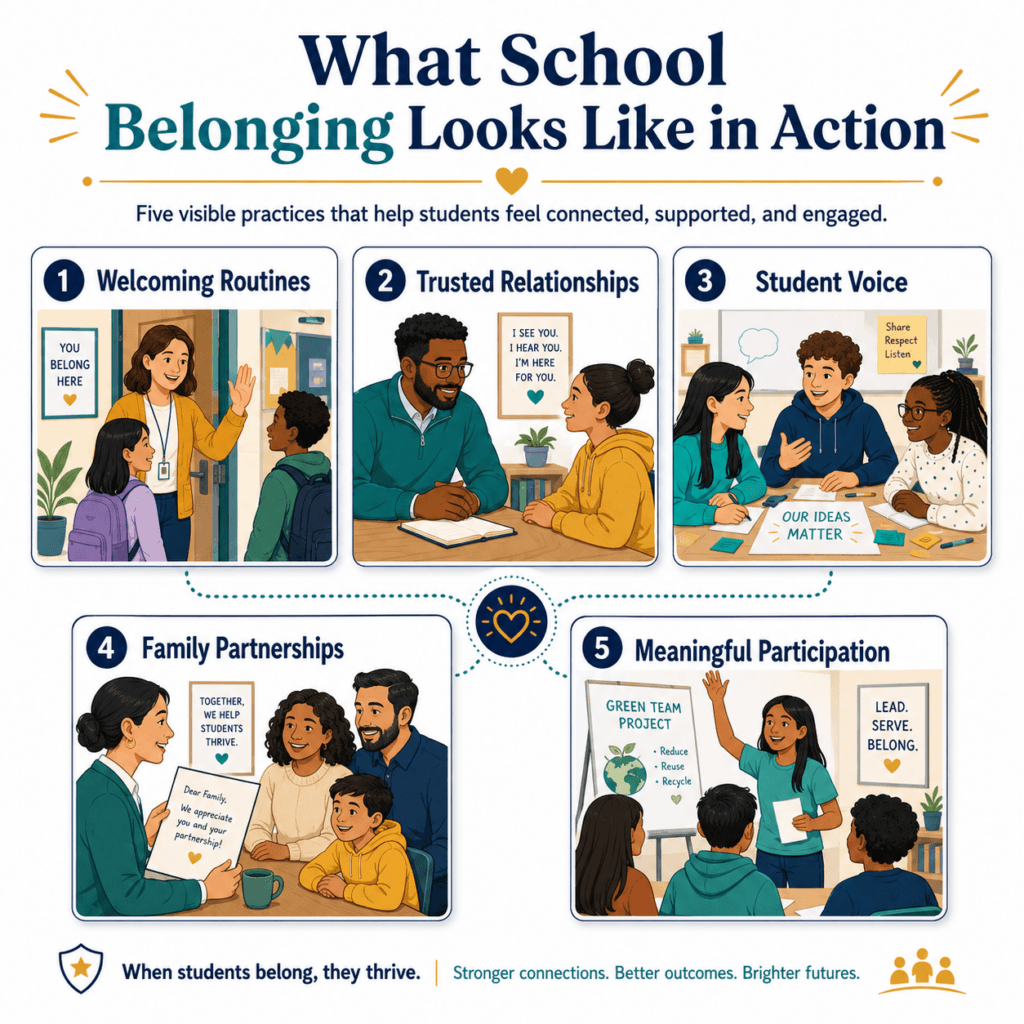
Belonging is not created through one program or initiative. It is cultivated through intentional daily practices. Here are several strategies educators can implement immediately to authentically build community and boost school attendance:
● Prioritize Connection During the First Days of School- During the first few days of school, focus only on community-building activities amongst students and staff before instruction. Studies reveal that students treat each other better and learn more together when they know more about one another.
● Co-Design Respectful Relationship Agreements- Collaboratively establish respect agreements, not rules, with students that define how everyone will treat one another in the classroom. Shared ownership strengthens accountability and trust.
● Learn and Pronounce Every Student’s Name Correctly- A student’s name is deeply connected to identity and dignity. Taking the time to learn correct pronunciations communicates respect and care.
● Know Every Student by Name, Strength, and Need- Students want to know they are more than a number or attendance code. Recognizing their strengths builds confidence and connection.
● Create Buddy Systems- Assign attendance buddies who check in when classmates are absent. Peer relationships can become a powerful motivator for attendance.
● Build Student Voice Into School Culture- Students are more engaged when they feel heard. Invite them into conversations about classroom culture, school climate, and solutions to attendance challenges.
● Extend Kindness When Students Return From an Absence- Instead of asking: “Why weren’t you here?” Try saying: “Now that you are here, our class is complete.” Words matter. Students should feel welcomed back, not shamed for returning.
● Create Intentional Connection Opportunities- Counselors can host “Lunch Bunch” groups for students who regularly eat alone, helping students build friendships and meaningful peer connections.
● Recognize Families as Partners- Families should feel valued, respected, and included in the educational process. Schools thrive when family strengths and contributions are acknowledged and celebrated.
School Connectedness and Belonging Create a Culture of Attendance
Attendance improvement is not solely about policies, incentives, or consequences. Sustainable attendance growth happens when schools intentionally foster relationships that make students WANT to show up.
When students feel connected to trusted adults, peers, clubs, activities, and curriculum, school becomes more than a building; it becomes a community.
Because when students feel they belong, attendance improves naturally, one positive relationship at a time.
Learn More About RaaWee ATTENDANCE+™

About the Author
Sharon Bradley is a national educational consultant, author, and speaker with over 25 years of experience in K–12 education. She previously served as a district administrator in the Dallas–Fort Worth area, leading districtwide efforts in truancy prevention and student engagement, and has held roles including student services director, high school principal, assistant principal, and dropout prevention coordinator.
She is the author of Chronic Absenteeism: Prevention and Intervention Strategies for Schools, Families, and Communities and Combating Chronic Absenteeism through Attendance Intervention Plans. Sharon is also a founding member of Attendance USA and was recognized as a 2024 “Leader to Learn From” by EducationWeek and the 2023 “Person of the Year” by the International Truancy and Dropout Prevention Association.
She currently serves as Principal Consultant at RaaWee K12 Solutions, supporting districts with proven attendance and engagement strategies.
.